A Room by Room Window Treatment Guide for Noblesville Homes
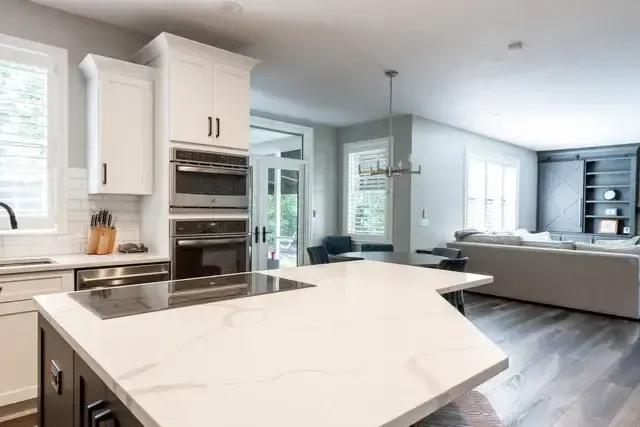
There's a moment in every window treatment project where the choices stop feeling exciting and start feeling like a test: blinds or shades, inside mount or outside, and who's actually going to reach the cord. The good news is that the decisions have an order, and once you follow it, most of them answer themselves. This is the guide we'd walk a Noblesville homeowner through at the kitchen table, in the same order we'd cover it in person, with the parts that usually get skipped left in.
The Four Types of Window Treatments
The most common mistake is picking one of the four families and using it on every window in the house. Blinds, which use hard slats or vanes that tilt, are the default a lot of people reach for everywhere, but a hard slat blind on a wide slider is awkward compared with vertical vanes made for exactly that job. Shades, one piece of material that rolls, stacks or folds, cover the widest range of problems, from a plain roller to a cellular shade built for a cold room.
Shutters get skipped more often than they should, especially on a front room in Noblesville, because they read as part of the house in a way nothing else does. Drapery gets left out of homes that would benefit most from it, particularly a room with hard floors and a lot of glass, where fabric is the only thing on this list that also absorbs sound.
Contracts and Custom Order Timelines
Custom fabrication usually runs two to five weeks from order to install. Since a room by room approach means several orders over time, order each room's full set together rather than piecing it out. Fabric is dyed in batches, so two shades in the same color bought months apart can read slightly different in afternoon light, and that mismatch cannot be corrected after the fact.
IN homeowners are protected by the Home Improvement Contract Act, IC 24-5-11, which requires a written contract with a real scope and a total price for any residential job over $150. Ask that the mount type and lift type be listed for every opening, by room, before signing anything in Noblesville.
Take the order seriously and the rest of it gets simple. Light first, then privacy, then who operates it, then the mount, then the material. Get an in-home measure before you commit to anything, and ask what the diagonals came out to. Noblesville Window Treatments is insured and bonded, and we'll put the mount type and lift type in writing for every opening before anything is ordered. Call (317) 999-5154 when you want the measure on the calendar.
How to Decide What Goes Where
The order that saves money is the same order that gets the room right: light, then privacy, then who operates it, then the mount, then material. Skip ahead to material first and you'll pay for a look that doesn't solve the actual problem.
A glare problem, like a west facing Noblesville family room with a television on the wall, gets solved by a solar shade's openness factor, not by a pricier fabric. A privacy problem, like a front room facing the street, gets solved by a top down bottom up cellular shade that covers the lower half of the glass while daylight still comes over the top. Neither of those is the most expensive option in its category, and neither needs to be.
Mount and material are where a budget actually flexes. Inside mount is usually the cheaper look. Outside mount costs a bit more in hardware but can rescue an opening that's out of square without any other fix.
What Drives the Price
Cost tracks the family you picked in the first section. Blinds and simple roller shades sit at the low end of custom pricing. Cellular shades and better solar fabrics push into the middle, with woven wood costing a bit more than either. Shutters and full drapery treatments, especially motorized ones, sit at the top. National ranges run roughly $60 to $600 a window for stock product and $250 to $2,600 a window for custom, measured and installed.
Inside any one family, mechanism moves the number more than color does: a cord lock costs the least, and cordless lift and motorization both add to it. A wide opening in an older Noblesville home costs more to finish than the same product on a newer, squarer one, simply because the install takes longer.
What Happens at the In-Home Measure
A measure takes about an hour in a typical house, and it's the part that separates a job that fits from one that fights you for a decade. Width gets taken at the top, the middle and the bottom of the opening, and height at the left, the center and the right. For an inside mount, the narrowest width and the shortest height are what count.
Square gets checked corner to corner in both directions. If the two diagonals differ, the opening is out of square, which predicts whether an inside mount will leave a wedge of daylight along the top. Mounting depth gets checked against what the product needs before its headrail can sit inside the opening. Come up short and the job moves to an outside mount, which changes the look and the price.
A shade ordered for an inside mount also comes back slightly narrower than the opening on purpose, so it can move freely. That's why a light gap along each side is normal rather than a defect, and tall, narrow shades tend to show more of it.
Frequently Asked Questions
Should I do inside mount or outside mount?
Inside mount sits within the opening and shows off the trim, which looks cleaner and is what most people picture. It needs enough flat depth for the headrail, and it leaves a small light gap along each side because the product gets built slightly narrower so it can move. Outside mount sits on the trim or the wall above the opening instead. It covers more light and hides an opening that's out of square, which makes it the fallback whenever there isn't enough depth for an inside mount. Bedrooms often go outside; living spaces usually go inside.
What if my window opening isn't square?
It happens more than people expect, especially in an older home where the frame has shifted a little over the years. At the measure, both diagonals get checked corner to corner, and if they come out different, the opening is out of square. A straight-edged inside mount shade can leave a visible wedge of daylight along the top in that case. An outside mount usually solves it cleanly, since it covers the whole opening, crooked part included, instead of trying to fit inside it exactly.
What's the real difference between room darkening and blackout?
Room darkening fabric blocks most light through the material but still glows a little, and it's what most people actually want in a bedroom. Blackout fabric passes essentially nothing through the material itself. Neither one seals the edges, so on an inside mount you'll still see a thin line of light down each side. If a genuinely dark room is the goal, the fix is an outside mount that overlaps the trim, or side channels that capture the edges.
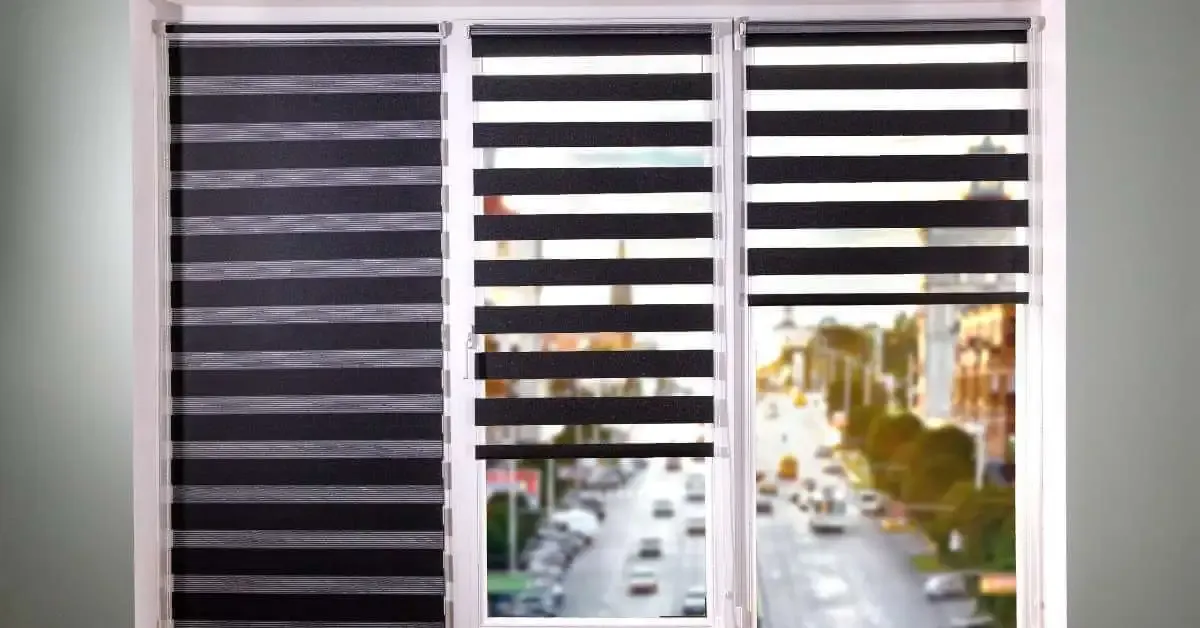 Blackout vs Room Darkening: What Actually Blocks More Light
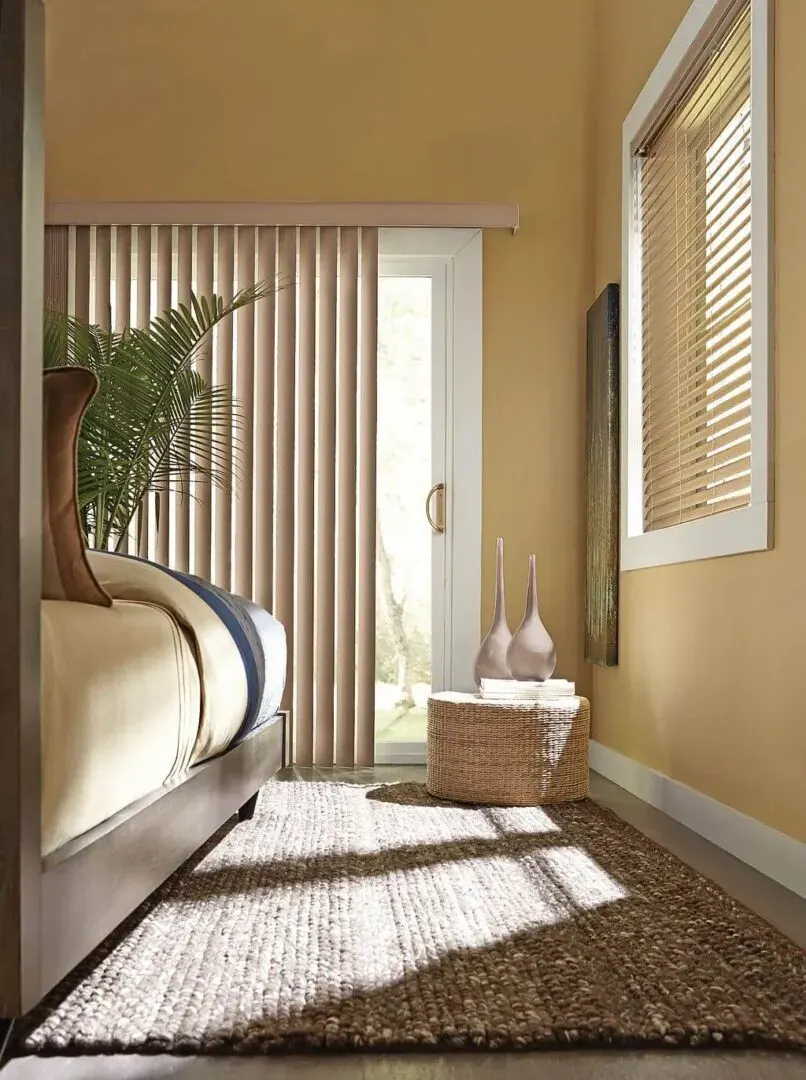 Inside Mount vs Outside Mount, Explained by Someone Who Installs Both
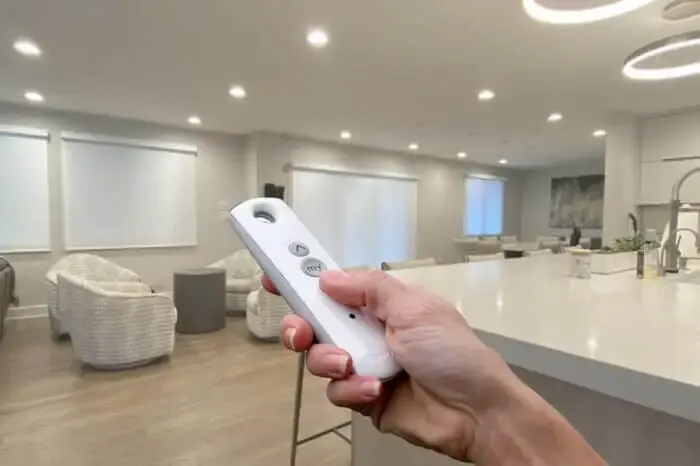 Which Smart Home Hub Fits Your Noblesville Shades