Blackout vs Room Darkening: What Actually Blocks More Light
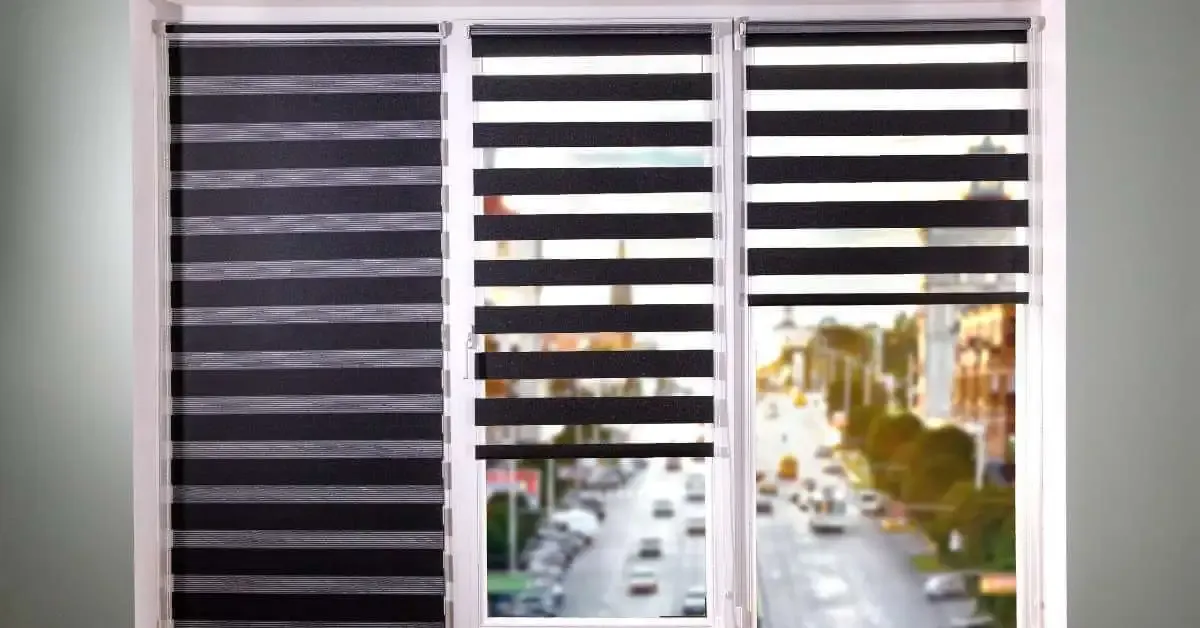
Every fabric shade on the market falls somewhere on a spectrum from barely dimming a room to blocking nearly all of the light, and blackout and room darkening are two specific, different points on that spectrum.
What Blackout and Room Darkening Actually Mean
If better sleep is the reason you're looking at shades in the first place, it's worth understanding exactly what blackout and room darkening promise before picking one. Blackout fabric is engineered to block essentially all light passing directly through the material. Room darkening fabric blocks the large majority of it, typically in the 95 to 99 percent range, while letting a soft glow through.
That difference sounds small on paper and feels much bigger at 5am when the sun comes up. A room darkening shade in a west or east-facing bedroom will noticeably dim the room but won't erase that first hint of daylight the way a true blackout shade will.
The fabric spec is only part of the sleep equation, though. How the shade is mounted changes how much of that promised darkness you actually get once it's installed in your Noblesville bedroom.
How the Fabric and Construction Differ
Assuming blackout and room darkening cost the same and just picking whichever sounds better is a mistake worth avoiding, since the two are built differently and priced accordingly. Blackout fabric layers a face fabric over a foam or acrylic core and a backing, sometimes a fourth layer on top of that, which is what makes it fully opaque.
Room darkening fabric leaves out at least one of those layers, typically relying on a single foam-backed or napped liner. It's a lighter, less expensive product to manufacture, and that savings passes through to the price tag.
The heavier blackout construction changes how the shade behaves in small ways too. It rolls into a slightly larger cylinder at the top, which occasionally means a bigger cassette or valance is needed to hide it, and it holds a bit more heat and dampens more outside noise than a lighter room darkening fabric would.
Price Difference Between Blackout and Room Darkening
As a general national range and not a quote for any specific window, room darkening cellular or roller shades commonly run $100 to $300 per window. Blackout versions of the same style typically run $130 to $380, roughly 15 to 25 percent more, because of the extra fabric lamination.
Across several rooms, that gap adds up quickly if blackout gets applied everywhere by default. A common budget approach is blackout in the primary bedroom and any media room, with room darkening covering the guest rooms and kids' rooms, plus the common living spaces.
Every number here is a general range, not a promise for your specific windows in Noblesville. A free in-home measure will price out both fabric grades room by room, so the budget is based on real numbers instead of a percentage estimate.
Figuring out which rooms actually need blackout and which do fine with room darkening is easier with an honest look at how each room gets used. A free in-home measure with Noblesville Window Treatments is a good chance to walk through that room by room.
How Much Light Gets Through, Realistically
Fabric spec and real-world darkness aren't quite the same measurement in a Noblesville home, and the gap between them comes down to mounting. An inside-mounted shade needs clearance to operate, usually a quarter inch to half inch along the sides, and that clearance is a light path that exists regardless of what the fabric itself is rated to block.
A room darkening shade lets light through two ways: a small amount through the fabric and more around that mounting gap. A blackout shade closes the first path almost completely but still has the second, so a true blackout shade on inside mount still shows a thin line of light at the edges, particularly noticeable after dark with any outdoor lighting nearby.
Outside mount, especially with extra fabric width overlapping the trim, addresses the gap directly. Side channel systems go a step further, guiding the fabric edges into a track that blocks that light path almost entirely. For anyone chasing true darkness, that mounting decision matters as much as the fabric grade.
Which Rooms Call for Which Option
Primary bedrooms are the most common ask for true blackout in Noblesville, especially for anyone working night shifts or trying to sleep past sunrise. West-facing bedrooms get harsh, low-angle sun in the evening that a room darkening shade will soften but won't fully stop, which is worth knowing if that's the room in question.
Nurseries and kids' rooms split down the middle. Some parents want full blackout for nap time and early bedtime, especially in summer when it's still light out at 8pm. Others prefer room darkening on purpose, so there's enough ambient glow to check on a sleeping kid without flipping on a hallway light.
Living rooms and kitchens rarely need true blackout, and dining rooms don't either. It can actually work against how the room gets used during the day. Room darkening or a lighter light-filtering fabric usually fits better there, saving blackout for the rooms where total darkness is genuinely the goal, like a home theater or media room.
Frequently Asked Questions
How much more does blackout cost than room darkening?
As a general national range, room darkening shades commonly run $100 to $300 per window, while blackout versions of the same style typically run $130 to $380, roughly 15 to 25 percent more because of the added fabric lamination.
Which rooms don't need blackout?
Kitchens and dining rooms rarely need it, and neither do most home offices, since blocking that much light during the day can make the space feel closed off. Room darkening or a lighter light-filtering fabric usually fits those rooms better.
Can I get blackout in a roman shade, not just a roller or cellular shade?
Yes, blackout linings are available across most shade styles, including roman shades. The lining sits behind the face fabric, so the outside of the shade still shows whatever pattern or texture you picked.
 Inside Mount vs Outside Mount, Explained by Someone Who Installs Both
 Which Smart Home Hub Fits Your Noblesville Shades
 How Custom Drapery Gets Measured and Made Right in Noblesville