Multifamily Window Treatments Throughout Noblesville
One specification per floor plan, and a dye lot record
What follows is what we'd tell you in person about this service, including which rooms it belongs in and which ones it doesn't. That second list is shorter but it saves more money.
- Service: Multifamily Window Treatments for Noblesville homeowners
- Service area: Noblesville, IN and surrounding areas Getting somebody out to measure is the easy part and happens on a normal schedule. After that the fabricator needs roughly two to five weeks. We give you a specific window when we write the order.
- Insured and bonded
- Serving Noblesville, IN since 2008
Expert Multifamily Window Treatments for Noblesville Homes
Noblesville carries the lowest owner occupied share of the four Hamilton County cities at 71.2 percent, across 27,115 households, so rental and attached product is a larger part of this market than its neighbors. The parcel record shows where it sits: recent attached housing downtown and at Federal Hill, plus villa and garden home plats running through Pebble Brook, where 221 of 563 parcels are recorded at a single story. Construction has not slowed, with 293 single family permits pulled in the first half of 2025 according to Builders Association of Greater Indianapolis figures. A property manager here is buying by floor plan across phases that were built years apart.
One specification per floor plan is the discipline that makes this work, and dye lots are the reason. Textile and vinyl production runs shift in tone between batches, so a unit ordered for phase three will not necessarily match phase one even with the same item number and the same color name, and a single turn unit swap three years in can read as a different white from across a courtyard. We record the item, the color, the run and the date against each plan, we recommend attic stock per plan rather than per building, and where a match is no longer available we advise doing the whole unit rather than the one opening. Volume also changes timing, since 2 to 5 weeks is a per order figure.
Signs You Need Multifamily Window Treatments
If you notice any of these in your Noblesville home, it is worth booking a measure. None of it is urgent, and none of it fixes itself either.
Turn times slip while somebody waits on blinds
A tilt wand order takes three weeks and a unit waits
Residents have hung their own curtains in the bedrooms
The clubroom drapery has no fire test paperwork
A new phase looks slightly off against phase one
The west facing buildings look older than the rest
Nobody can say what product a floor plan carries
Wood blinds over kitchen sinks have started to bow
The leasing office has the same blinds as the units
Two buildings on one plan measure differently
How Noblesville Window Treatments Handles Multifamily Window Treatments
Every job follows the same five-step process. Transparent, thorough, and done right the first time.
Unit mix and plan types documented
One specification written per plan
Sample units field verified per type
Commercial contract form issued
Draw direction set per patio opening
Multifamily Window Treatments in Noblesville
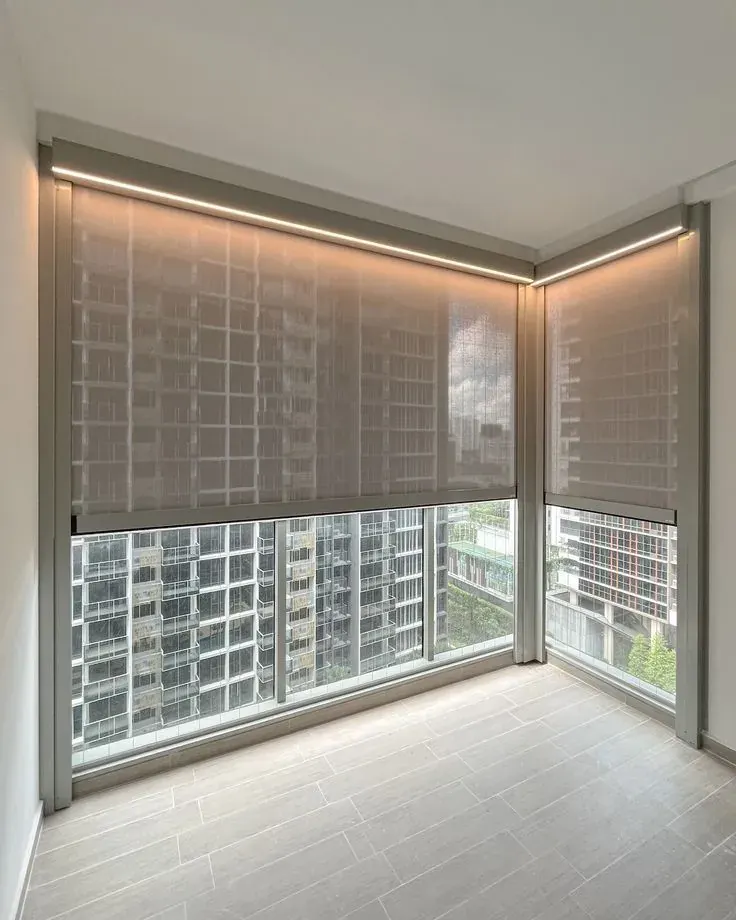
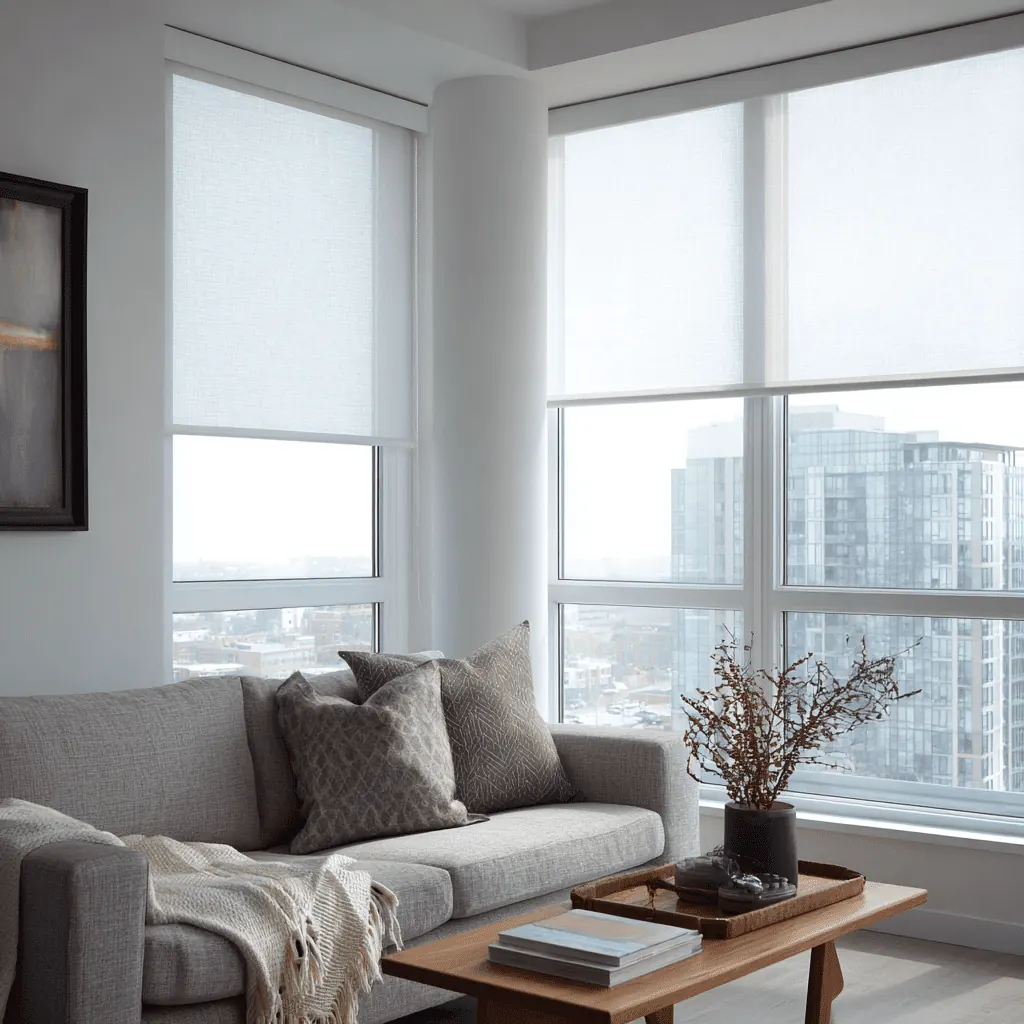
Photographs from real multifamily window treatments jobs completed by our crew in Noblesville and surrounding areas.


What Multifamily Window Treatments Includes
Every Noblesville job is documented item by item. Here is what the crew covers.
Unit mix and floor plan types documented first, so the specification is written per plan rather than per apartment
One repeatable specification developed for each plan type and approved once, instead of a decision made at every door
A representative sample of units field verified per plan type, because as-built openings drift from the unit matrix
Verification sample sized honestly and the variance risk stated in writing rather than assumed away
Model units treated as the approval step, with the owner signing off on the real product in the real room
Common areas, leasing offices and amenity space scoped separately, since those want a different product from the units
Patio and balcony openings specified with individually replaceable elements so one damaged piece isn't a whole reorder
Cordless operation specified in units so no accessible operating cord is handed to a resident
Cord access on every in-unit product checked against ANSI/WCMA A100.1-2022 before the specification gets signed off
Dye lot behavior disclosed at contract, since fabric and vinyl run in batches and a later phase can sit slightly off
Attic stock agreed per plan type so a turn can be completed without waiting on fabrication
Turn-cycle replacement cost per unit worked out at the same time as the initial spec, because that number is the one you live with
Phasing built around lease-up, occupancy or turn schedules, building by building and stack by stack
Access arranged in writing with property management, including notice to residents in occupied buildings
Release dates and delivery windows confirmed in writing per building, then reconfirmed whenever a factory date shifts
Contract form matched to the customer, since owner-side work is a commercial agreement and work for an individual homeowner falls under IC 24-5-11 over $150
Packaging and old product removed from the property rather than staged in corridors or in a dumpster nobody agreed to
Closeout handed to management with the plan-type schedule, product identification and reorder detail for every unit type
What Multifamily Window Treatments Cost in Noblesville
Multifamily prices per unit and per plan type, which is the only way the number means anything to an owner. The national anchors are roughly $60 to $600 per window for stock blinds and shades and roughly $250 to $2,600 per window for custom-fabricated product. Those are national category ranges rather than a bid for a property in Noblesville. Most in-unit work sits low in that territory by design, because the specification that wins is the one that's cheap to repeat and cheap to repair on a turn. Common areas and leasing offices are usually specified up from that, since those spaces sell the building. What moves a Hamilton County bid most is plan-type count: eight repeating plans price very differently from twenty-two. Noblesville Window Treatments bids from the unit matrix and a verified field sample.
How Multifamily Window Treatments Differ by Product
Every product in this trade behaves differently in a room. Here is what that means for this work.
Per-plan-type specification: One written spec for each floor plan covering product, size, color and mounting, approved once and repeated. It's the single decision that determines whether your turns are a stocked part swap or a fresh order every time a resident leaves.
Faux wood blinds for unit windows: The volume answer in most communities. Composite slats handle bathroom and kitchen humidity, they clean easily between residents, and they replace at a price that survives an annual turn budget. Cordless lift is what belongs in a rented unit.
Vertical blinds for patio openings: Still correct for a balcony or patio door, for one reason that outweighs style: vanes replace individually and cheaply. A resident damages two vanes, maintenance swaps two vanes. That economics is why verticals stay in service across whole portfolios.
Roller shades for a modern unit standard: Where the community positions itself above a basic blind package, rollers give a cleaner look and a simpler mechanism with fewer parts to break. Specify the fabric with turn cleaning in mind, since a textured weave holds more than a smooth one.
Cordless lift as the unit standard: No accessible operating cord handed to a resident, which is the right call in housing you don't supervise. It also removes the most common maintenance complaint in a corded portfolio, which is a cord lock that has stopped holding.
Common area and amenity specification: Leasing offices, clubrooms and fitness spaces specified like commercial work rather than like units, with solar screens sized to the elevation and a finished head detail. These are the rooms a prospective resident decides in.
Attic stock by plan type: Spares held on site in the sizes each plan repeats, so maintenance completes a turn the same day rather than holding a unit off market waiting for a fabrication run. The quantity is set against your historical turn rate, not against a guess.
Phase-consistent ordering: Ordering a full phase quantity in one run so the fabric and vinyl come from consistent batches. It's the practical defense against dye lot drift, and it costs less than discovering the drift in building four.
Repairable hardware selection: Choosing product lines where cord locks, wands, carriers, valance clips and individual slats are stocked parts. A line with no spare parts channel looks cheap at bid and expensive over five years of resident damage.
Turn-kit packaging: Product delivered pre-sorted and labeled by plan type so maintenance grabs a kit rather than measuring a unit. It sounds like logistics because it is, and it's where most of the labor savings on a large portfolio actually come from.
Multifamily Window Treatments FAQ
Questions we hear most often from Noblesville homeowners considering multifamily window treatments.
Multifamily Window Treatments Across Noblesville
We measure and install in every one of these Noblesville neighborhoods. Each has its own page with the build eras, window conditions and mounting notes for that section.
- Multifamily Window Treatments in Historic Courthouse Square Neighborhood
- Multifamily Window Treatments in Catherine Street Historic District
- Multifamily Window Treatments in South 9th Street Historic District
- Multifamily Window Treatments in Pebble Brook
- Multifamily Window Treatments in Sagamore
- Multifamily Window Treatments in The Wellington plats
- Multifamily Window Treatments in Potters Woods
- Multifamily Window Treatments in Finch Creek by Del Webb
Other Window Treatment Services in Noblesville
Noblesville Window Treatments handles the full scope of window treatment work. Explore our other services below.
Schedule Your Free In-Home Measure in Noblesville
Reach Us Directly
Our team prioritizes scheduled measures and service calls, and books in-home measures during business hours.
Ready to Book Your Measure?
Call us to set up an in-home measure, or to ask about a treatment that has stopped working. We will talk it through on the phone first.