Sheer Shades

Sheer Shades Serving Noblesville, IN

Soft vanes, and a straight answer about darkness

Call (317) 999-5154Get Free Quote
Quick Answer

Here's the detail behind the product description. What it's made of, how it's sized, what drives the price, how long it takes to build and what the manufacturer covers if it fails.

  • Service: Sheer Shades for Noblesville homeowners
  • Service area: Noblesville, IN and surrounding areas
  • For anything already installed, service visits are quick because we're working with parts. For new custom orders, expect a measure, then a few weeks of fabrication, then an install appointment we book once the product has been inspected.
  • Insured and bonded
  • Serving Noblesville, IN since 2008
Sheer Shades Services

Expert Sheer Shades for Noblesville Homes

A sheer shade suspends fabric vanes between two sheer facings, so tilting the vanes changes the room without moving the shade, and the view stays there in a softened form. That's a specific answer to a specific problem, and Noblesville has two neighborhoods full of it. North Harbour's 622 houses sit between Hague Road and Morse Reservoir, and the lots nearest the water take reflected light off an open western fetch late in the day. Pebble Brook's 563 houses include fairway frontage rear elevations with an unobstructed sight line and nothing to break the sun. In both cases the household bought the view and doesn't want to trade it for a flat panel.

Here's the limit. Closing the vanes on a sheer shade is not blackout and it isn't even reliable room darkening. Both facings are sheer by construction, so light passes through them at every position, and after dark with a lamp on behind you people outside will read shape and movement through a fully closed shade. The fabric is also delicate. A vane can be creased permanently by a careless pull, and wet cleaning is off the table on most lines. If the room is a bedroom that has to be private after dark, this is a second layer over something else, and on the tight Deer Path lots at 0.02 to 0.36 acres that isn't optional.

When to Call

Signs You Need Sheer Shades

If you notice any of these in your Noblesville home, it is worth booking a measure. None of it is urgent, and none of it fixes itself either.

Blinds block the view you paid for

Vanes crease because the shade rolls up closed

The exposed roll at the top looks unfinished

Cats have pulled threads out of the front facing

The front room feels exposed to the sidewalk

A knit facing has a stain that won't come out

You close the blinds and the room goes gloomy

Afternoon glare washes out a television

Sheers hang behind blinds doing the same job twice

Vanes swing and rustle at an open window

Our Process

How Noblesville Window Treatments Handles Sheer Shades

Every job follows the same five-step process. Transparent, thorough, and done right the first time.

1

Working sample shown open and closed

2

Vane size held at the window

3

Light gap disclosed in writing

4

Room checked for steam and pets

5

Operating order shown at the shade

Real Project Photos

Sheer Shades in Noblesville

Photographs from real sheer shades jobs completed by our crew in Noblesville and surrounding areas.
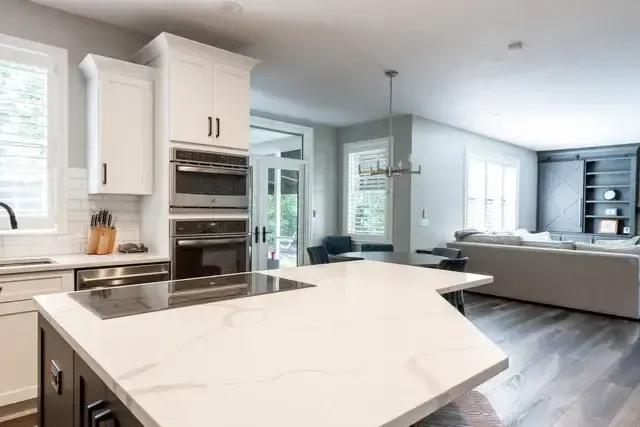
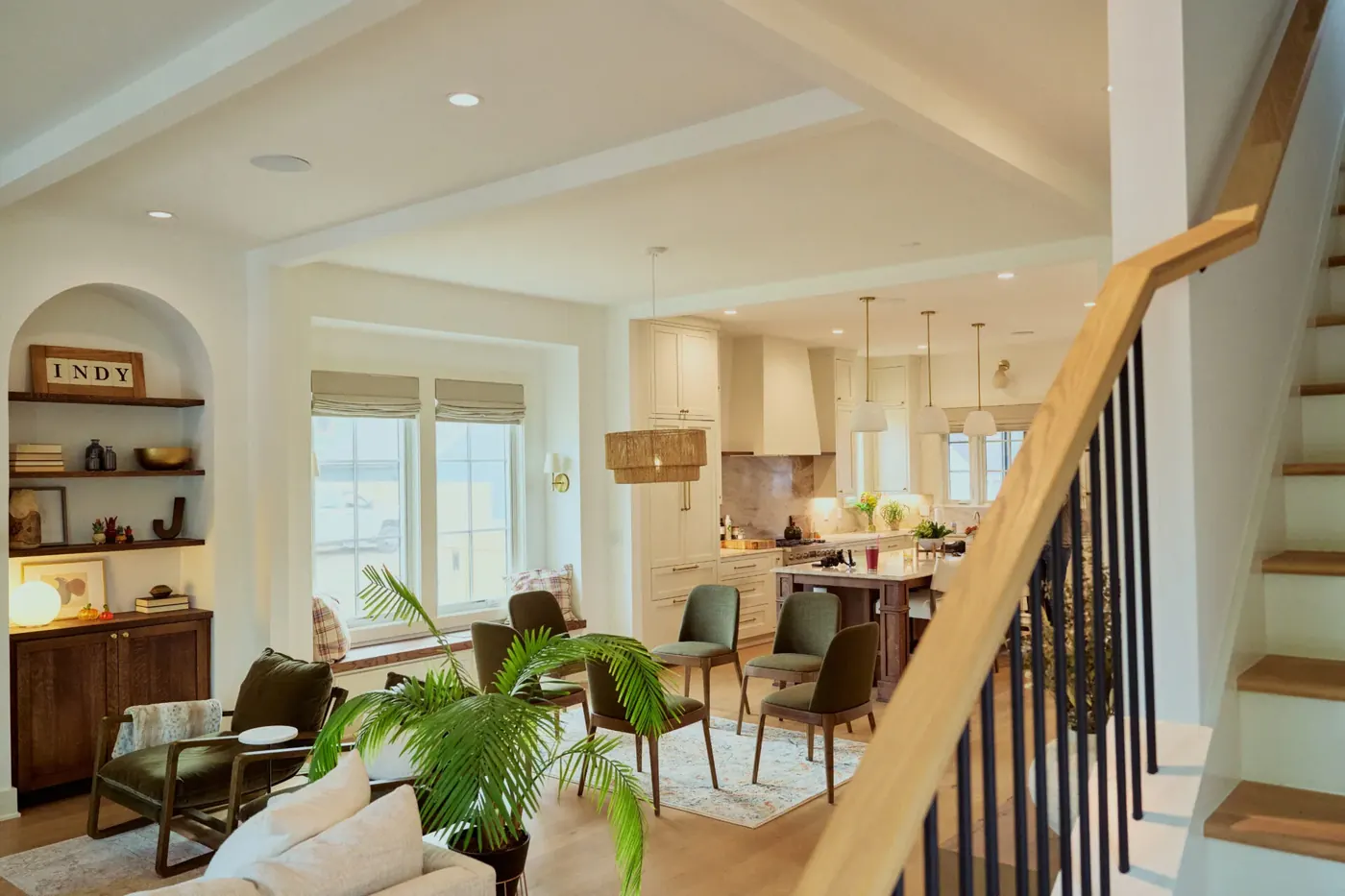
Custom shades measured and installed in NoblesvillePlantation shutters fitted to a Noblesville windowCellular shades in a Noblesville living room
Scope of Work

What Sheer Shades Includes

Every Noblesville job is documented item by item. Here is what the crew covers.

What the room needs settled first, since a sheer shade answers glare and daytime privacy and does not answer darkness

Closed-vane behavior shown to you on a working sample before you order, because that is the whole product

The honest limit stated at the measure: closed vanes are private, and they are not blackout in any build

Vane size chosen against the opening, 2 inch on short windows and 3 or 4 inch where the glass can carry it

Vane opacity picked per room, a light filtering vane for living space and a room darkening vane where dimmer matters

Mounting depth measured for the roll-up, since the whole assembly rolls into the headrail and needs the room to do it

Clearance checked between the vanes and the glass, plus anything else living inside the opening

Three widths and three heights per opening with a corner-to-corner check, because a sheer shows an out-of-level hem instantly

Light gap per side disclosed in writing, with Lutron publishing 3/4 inch per side as a real inside-mount figure

Outside mount with a genuine overlap offered wherever the edges of the glass matter more than the reveal does

Night reversal explained before the sale, since lamps inside change what the sheer facing does

Rooms that truly need dark identified early and layered with a second treatment rather than oversold on this one

Cordless lift specified in any room children use, with products conforming to ANSI/WCMA A100.1-2022 for cord access

Width and drop checked against the fabric weight, since a knit facing over a long drop behaves differently than a short one

West and south exposures flagged, because a knit sheer works harder on hot glass than it does on a north wall

Every opening in a room ordered together so the facings come off the same run

Everything written down before fabrication, since IC 24-5-11 requires a contract on residential work over $150

Vanes opened and closed at every window and the shade cycled fully before we leave, with the right order to do it in shown to you

Pricing

What Sheer Shades Cost in Noblesville

Published national ranges put custom-fabricated shades at roughly $250 to $2,600 per window, with motorized units at roughly $300 to $1,500 per window installed. Those are national category figures rather than a quote for anything in Noblesville. Sheer shades sit in the upper half of the custom band, and the construction explains it: there are two knit facings and a row of fabric vanes suspended between them, assembled into one shade that then has to roll cleanly into a headrail. That is more fabric and more assembly than a single-layer roller. Vane size, vane opacity and the width of the opening move the number from there, and a fabric-wrapped headrail is usually part of the specification rather than an extra. Noblesville Window Treatments prices from measured openings around Hamilton County.

By Product

How Sheer Shades Differ by Product

Every product in this trade behaves differently in a room. Here is what that means for this work.

2 inch vanes: The finest scale we hang, and the right one on short windows and in smaller rooms. More vanes cross the same drop, so the face reads softer and the closed position looks more like a solid fabric than a row of louvers.

3 inch vanes: The middle size and the one most rooms end up with. It gives a clear view through the open position without looking oversized on an ordinary bedroom or dining room window, and it carries a normal drop well.

4 inch vanes: A bolder scale for tall glass and large openings, where a fine vane would look busy across that much area. Open, the view is genuinely open. Closed, the horizontal lines are a real part of how the room looks.

Light filtering vanes: The standard vane. Closed, it gives you privacy and a bright, soft room rather than a dim one. It's what belongs in a front room where the point is to look open from the inside without being open from the sidewalk.

Room darkening vanes: A denser vane that takes a bedroom down to genuinely dim when closed. Understand the limit: the two sheer facings are still sheer, so light passes at the vane joints and around the edges. Darker, never dark.

Fabric-wrapped headrail: A headrail covered in the shade fabric so the roll is hidden and the top of the window reads finished. On this product it's effectively standard, since a bare tube with a sheer assembly wrapping around it looks unresolved.

Cordless lift: A spring lift with no operating cord anywhere on the product, which is what we specify in rooms children use. The vanes still tilt with their own control, and there's nothing hanging beside the window to reach for.

Motorized lift and tilt: A motor that raises the shade and sets the vane angle, which matters here because vane position is the whole feature. Scenes let you save an open-vane daytime setting and a closed evening one and return to both exactly.

Outside mount with overlap: Mounted above and past the opening so the fabric laps the trim on both sides. It's how you cut the side light an inside mount always leaves, and on this product it also keeps the vanes clear of anything sitting inside the opening.

Layered with a blackout roller: A dual bracket carrying a sheer shade and a blackout roller at the same window, so the room gets the daytime look and the nighttime dark from two products doing what each is good at. It needs mounting depth planned up front.

Light Control

See What Each Fabric Does To The Light

Pick a fabric below and the window updates. It's a drawing rather than a photograph, so read it as a rough guide to what each family does in a Noblesville room, and to what it doesn't do.

Fabric type

Sheer, 10 percent openness

Ten percent of the weave is open, so you keep the view and most of the daylight. Glare drops a little. After dark, once your lamps are on, someone outside can read shapes through it, which is why this belongs on a view window rather than a bedroom.

Openness factor is printed on the fabric card, so you can compare one line against another before you order anything.

Keeps the viewNot private after dark

Solar, 5 percent openness

The usual pick for a west window or a covered porch. You can still read the yard through it, glare comes down noticeably, and the fabric intercepts a good share of the sun before it reaches you at four in the afternoon.

It also cuts the UV landing on floors and furniture. NFRC puts UV at roughly 40 to 60 percent of fading damage, so this slows fading rather than stopping it.

View and glare controlSlows fading

Solar, 3 percent openness

A tighter weave. The room goes dimmer and the view drops back to an outline. Choose it where the sun is the problem and the view is second, which around here usually means a west wall in July. That's a common call on this side of Indianapolis.

Openness affects how much you see out, not how private you are. A 3 percent fabric still shows silhouettes at night.

View becomes an outlineStrong glare control

Solar, 1 percent openness

Close to a solid fabric with a little view left in it. This is the strongest glare control in the solar family.

The trade is that it darkens the room on a gray January day too. Indianapolis averages a January high near 36F and the light is flat, so think about how the room reads in both seasons before you commit.

Darkest solar optionDim on gray days

Light filtering

No view through it. Daylight comes through the face diffused, so the room stays bright without a hot spot across the television or the kitchen island. This is the default for living spaces.

It isn't private in reverse at night. With the lamps on and the sun down, silhouettes still show.

No view through itBright without the glare

Room darkening

A denser fabric, usually with a liner behind it. Most of the light coming through the face is gone.

Light still arrives around the edges on an inside mount, so a room darkening shade gives you a dim room rather than a dark one. If someone in the house sleeps during the day, say so at the measure and we'll scope it differently.

Dim, not darkEdges stay bright

Blackout

The fabric itself passes essentially no light. What you'll still see is the perimeter. Lutron publishes an inside-mount light gap of about 3/4 inch per side on its Roller 20 and 64 shades, along with a standard factory deduction of 1/16 inch per side, and shades over 120 inches tall or past a 4:1 height-to-width ratio get larger gaps than that.

So if you need a genuinely dark bedroom, that gap has to be dealt with on purpose, either with side channels or by going outside mount. We tell you which one your opening can carry while we're still standing in the room.

Dark facePerimeter needs a plan

Openness factor is a measured fabric spec, so you can compare it line to line. The category names are not measured. One maker's room darkening can behave like another maker's light filtering, which is why the sample books come to the measure and get opened in the room they're going in, at the hour that room has the problem.

Common Questions

Sheer Shades FAQ

Questions we hear most often from Noblesville homeowners considering sheer shades.

Partial privacy, and less than most people assume. During the day the brighter side wins, so from outside a closed sheer shade reads as a soft blank surface and you're fine. After sunset the lighting flips. With lamps on inside, an observer on the street sees movement and shape through the closed vanes, because both facings still pass light. On a North Harbour street with 0.28 to 0.80 acre lots there's usually enough setback that it doesn't matter. On a tighter lot facing a sidewalk, plan a second treatment or accept what the product is.
It's one of the better ones, for a reason specific to that exposure. Reflected light off Morse Reservoir arrives low and late and it's more about glare than heat, so a product that scatters the beam without removing the view does the job people actually want. Tilting the vanes part way knocks the hard edge off the reflection while leaving the water visible. The caveat is fade. Sustained low angle sun works on textiles, and a sheer vane is a lightweight textile. Fade is slowed by fabric choice rather than prevented, and NFRC attributes 40 to 60 percent of fading damage to ultraviolet alone.
Because there's more product in them. A roller shade is one layer of material on a tube. A sheer shade is two sheer facings with fabric vanes insured between them, assembled to a tolerance that keeps every vane parallel across the full width, plus a tilt mechanism that has to move all of them together. The fabrication is closer to a shutter than to a roller in complexity. Custom window treatments run roughly 250 to 2,600 dollars per opening on national figures, and a sheer shade sits well up that range rather than at the bottom of it.
You can, as long as it isn't doing the darkening. The post-1990 North Harbour sections carry two story foyer glass and larger rear openings, and a sheer shade suits those rooms. A bedroom is different. The way it's usually solved is a sheer shade for the daytime look with a room darkening roller or a blackout cellular behind or above it, either as a dual roller assembly or as two separate units on the same opening. That's two products and two prices, and it's the honest specification rather than pretending one shade covers both jobs.
It generally stays creased. The vanes are lightweight and insured to the facings along their length, so a hard pull, a pet, or a vacuum head catching one will fold it, and there's no reliable way to steam or press it back without damaging the bond. Individual vane repair isn't a normal service on most lines, which means a damaged section usually becomes a replacement shade. That's worth knowing in a house with a large dog or small children, and it's a reason we sometimes point people at a horizontal blind or a solar shade for the rooms that take the most traffic.
Width is the real constraint. Every vane has to stay parallel and evenly tensioned across the whole span, so a wide unit is heavier to operate and more prone to a visible sag in the middle of the vanes. Manufacturers publish maximum widths for exactly that reason and they're lower than for a roller. On the wide fairway facing openings in Pebble Brook, splitting into two units on a shared headrail usually looks better and operates better than pushing one shade to its published limit. We take the opening first and tell you which side of that limit you're on.
It's a row of horizontal fabric vanes suspended between two knit sheer facings, all built into one shade that rolls up into a headrail. Tilt the vanes open and you're looking out through sheer fabric with soft daylight coming in. Tilt them closed and the vanes overlap into a face that gives you privacy. Raise the whole thing and it disappears into the headrail, leaving the glass clear. So it does three jobs, which is why it costs more than a shade that does one.
No, and that's the disclosure that matters most on this product. Closing the vanes gives you privacy and a much softer room, and it is not blackout in any version, including the room darkening vane. The two sheer facings sit in front of and behind the vanes and they still pass light, particularly at the joints where one vane meets the next. If a bedroom in Noblesville has to be dark for shift work or for a baby, we'll layer this with a blackout roller or steer you to a different product entirely.
With the vanes closed, mostly, and with an honest caveat. During the day it's brighter outside than in, so a closed sheer reads as solid from the street. After dark with lamps on, the balance flips and a closed sheer can still show shapes and movement from outside, especially on a first floor window facing a sidewalk. It's far better than an open vane, which after dark is genuinely see-through. On a front room that faces a street, we talk about this before you order, not after.
By the size of the glass, mostly. A 2 inch vane suits short windows and small rooms, and the closed face reads almost like a solid fabric. A 3 inch vane is the middle and it suits most ordinary openings. A 4 inch vane belongs on tall glass, where fine vanes across a large area start to look busy, and where the open view really opens up. Hold the samples in the actual room, because scale is the thing that photographs badly and reads instantly in person.
How much the vane itself blocks when it's closed. A light filtering vane keeps the room bright and soft, which is what a living room or a dining room usually wants. A room darkening vane is denser and takes a bedroom down to a real dim. Neither changes the facings, so the shade's honest ceiling doesn't move. Think of the vane choice as the difference between soft daylight and a good afternoon nap, rather than between light and dark.
More than a plain roller wants, yes. The whole assembly rolls into the headrail, so the headrail is larger than a bare tube bracket, and the vanes need to hang clear of the glass and of anything living inside the opening. We measure the depth at the top of the opening at the measure and we tell you honestly whether an inside mount will sit fully inside or stand proud of the trim. Where the depth isn't there, an outside mount is the better answer and it usually looks better anyway.
Down both sides on any inside mount, because the shade has to be narrower than the opening to travel at all. Lutron publishes 3/4 inch per side as a real inside-mount figure on their roller product, and the physics is the same here. The factory also takes its own deduction on top of that, which Lutron publishes as 1/16 inch per side. If the edges matter, an outside mount with a genuine overlap onto the trim is the fix, and it costs no more to decide that now than to regret it later.
With air, gently, and not much else. The facings are a fine knit and they hold dust rather than shedding it, so a vacuum on low with a soft brush across the face is the whole routine. Don't scrub, don't soak, and don't attack a mark with a wet cloth, because you can distort a knit and it doesn't come back. Static builds on these in a dry heated Noblesville house in February, which is worth knowing before you assume the shade is dirty.
It becomes a factory repair rather than a field fix, and you should hear that before you buy. The vanes are attached to both facings along their length, so there's no way to swap one out at the window the way you can replace a vertical vane or a shutter louver. A pet that climbs, a vacuum head that catches, or a window that gets opened with the shade down are the usual causes. It's one honest reason we don't put these in a mudroom or over a dog's favorite window.
They both tilt, and they feel nothing alike. A blind tilts hard slats, which gives very precise angle control and a crisp look, and every slat collects dust individually. A sheer shade tilts soft fabric vanes behind a sheer face, so the light coming in is diffused rather than striped, and it looks like a shade rather than like hardware. The blind wins on precision and on cost. The sheer wins on how the room feels at four in the afternoon.
Different problems. Cellular is the one with the documented energy work behind it, where DOE and ORNL measured up to 20 percent heating energy savings against a bare window, and it goes fully dark in a blackout fabric. A sheer shade doesn't claim either. What it does instead is let you keep a view and daylight while still being private, which a cellular shade cannot do at all, since a cellular is either up or down. Front rooms often get sheers, bedrooms often get cellular.
It works there, with realistic expectations. A knit facing on a west or south window in Hamilton County takes real sun from May through September, and lighter colors and finer knits soften over the years faster there than on a north window. The vanes themselves are the more durable part. On the room side, NFRC attributes roughly 40 to 60 percent of fading to UV, so closing the vanes through the afternoon slows what happens to your floors and furniture. Slows it, not ends it.
A powder room, comfortably. Directly over a sink or near a shower, we'd think twice. The fabrics are polyester and the humidity itself is not the problem the way it is with wood. Splashes are, because water marks show on a sheer facing more than on a solid fabric and there's no scrubbing a knit clean afterward. Steam that carries cooking oil is worse. Over a kitchen sink we'll usually recommend something you can wipe.
Two to five weeks in the normal custom fabrication window, and this product tends toward the middle of it because the vanes and both facings are assembled before the shade is built. Motorized units add a step. That window goes in your paperwork with the scope, the dates and the total price, which the Indiana Home Improvement Contract Act requires on residential work over $150. If a factory date shifts, we tell you the week we learn it instead of letting the calendar do it.
Areas We Serve

Sheer Shades Across Noblesville

We measure and install in every one of these Noblesville neighborhoods. Each has its own page with the build eras, window conditions and mounting notes for that section.

Free In-Home Measure

Schedule Your Free In-Home Measure in Noblesville

Contact Information

Reach Us Directly

Our team prioritizes scheduled measures and service calls, and books in-home measures during business hours.

Office
1417 Commerce Avenue, Indianapolis, IN 46201
Hours
Mon-Fri 8a-6p
Service Area
Noblesville, IN and Surrounding Areas

Ready to Book Your Measure?

Call us to set up an in-home measure, or to ask about a treatment that has stopped working. We will talk it through on the phone first.

Service area

Serving Noblesville and the surrounding area

Call NowGet Quote