Aluminum Mini Blinds

Noblesville Aluminum Mini Blinds

Slim headrails for openings that will not take depth

Call (317) 999-5154Get Free Quote
Quick Answer

Below are the questions people ask about this specific product line. Read the drawbacks as carefully as the benefits, because in this trade the drawbacks are what people remember two years on.

  • Service: Aluminum Mini Blinds for Noblesville homeowners
  • Service area: Noblesville, IN and surrounding areas
  • Realistic sequence: appointment for the measure, a written specification, then fabrication of two to five weeks, then install. None of it needs rushing, and pushing the factory is where mistakes on custom sizes come from.
  • Insured and bonded
  • Serving Noblesville, IN since 2008
Aluminum Mini Blinds Services

Expert Aluminum Mini Blinds for Noblesville Homes

Aluminum mini blinds are a specification, not a compromise, in the places they belong. One inch slats on a slim headrail take up almost no space at the top of an opening, they cost the least per window of any custom product, and they don't care about humidity. In Noblesville that combination lands them in three places: upper floor offices in the downtown blocks, utility and service rooms, and rental property in a city where 28.8 percent of households don't own their home.

Downtown is the interesting case. The commercial historic district carries 54 contributing buildings, and the second and third floors above the storefronts have become offices, studios and apartments over the last two decades. Those openings are tall, narrow, often masonry framed, and were never designed to take a modern headrail. A slim aluminum unit fits where a deeper cassette won't, and it can be specified in a finish that disappears against a painted frame instead of announcing itself from the street below.

The honest limitation is the slat itself. Aluminum creases permanently once bent, and unlike a fabric shade there's no recovering it. A room where blinds get pushed aside constantly, a door opening that swings against them, or a household with a large dog will crease slats and the only fix is replacing the unit. We say that up front, because the low price makes it tempting to specify them everywhere and there are rooms where the money is better spent on something that recovers from abuse.

When to Call

Signs You Need Aluminum Mini Blinds

If you notice any of these in your Noblesville home, it is worth booking a measure. None of it is urgent, and none of it fixes itself either.

An upper floor office opening won't take a deep headrail

A utility room needs cover without any real budget

Slats on the existing blind are creased and won't straighten

The tilt wand has snapped off at the gear

A rental unit needs something replaceable per opening

Stack height at the head has to stay minimal

A tall narrow downtown opening needs a slim profile

Cords need replacing with a cordless system for safety

Our Process

How Noblesville Window Treatments Handles Aluminum Mini Blinds

Every job follows the same six-step process. Transparent, thorough, and done right the first time.

1

Confirm it is the right room

We're direct about where this product belongs. Utility spaces, service rooms, upper floor offices and rentals get real value from it. A primary bedroom or a formal front room usually doesn't, and we'll say so rather than sell down. The exception is a tall narrow opening where headrail depth is the binding constraint, and there the slim profile is genuinely the correct engineering answer.

2

Measure every opening

Three widths, three heights and a diagonal per opening, even on a run of identical looking commercial windows. In the downtown blocks the openings sit in masonry and no two were finished quite the same, and in a 1970s house the depth left at the stop varies by room. A run of twelve openings can carry three different finished widths and it's cheaper to find that now.

3

Check the mounting substrate

Masonry, plaster over lath, steel stud and drywall all take different anchors, and the downtown upper floors will hand you at least two of those in one job. We locate what's behind the mounting line before specifying fixings, because a headrail pulling out of soft plaster six months later is a callback nobody enjoys and it damages the surface on the way out.

4

Select finish and slat

Finish is chosen against the frame color rather than against the wall, so the blind recedes instead of drawing the eye. On street facing commercial openings we also look at what the assembly reads like from the sidewalk, since a row of mismatched blinds above a storefront is visible from the square. Slat width and headrail profile are matched across a floor for consistency.

5

Specify the lift system

Cordless lift is the default recommendation and it removes the biggest maintenance item on this product. Where a corded system is specified for cost, product built to ANSI/WCMA A100.1-2022 is what goes on the order, and any continuous loop gets its chain tensioner fastened to the wall at installation. On commercial jobs, control reach and operating force are checked against the ADA sections that apply.

6

Install and hand over spares

Brackets go in level, the units are run through full tilt and lift, and on a multi opening commercial job we label the schedule so a facilities team can order a matching replacement in three years. Where a room is genuinely hard on slats, we suggest holding one spare unit from the original run rather than trying to match a discontinued finish later.

Real Project Photos

Aluminum Mini Blinds in Noblesville

Photographs from real aluminum mini blinds jobs completed by our crew in Noblesville and surrounding areas.
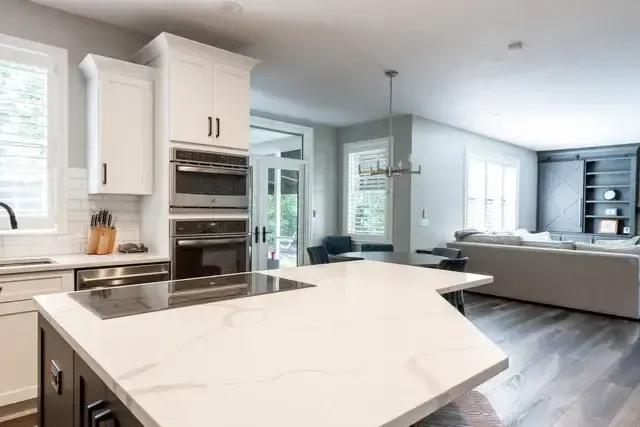
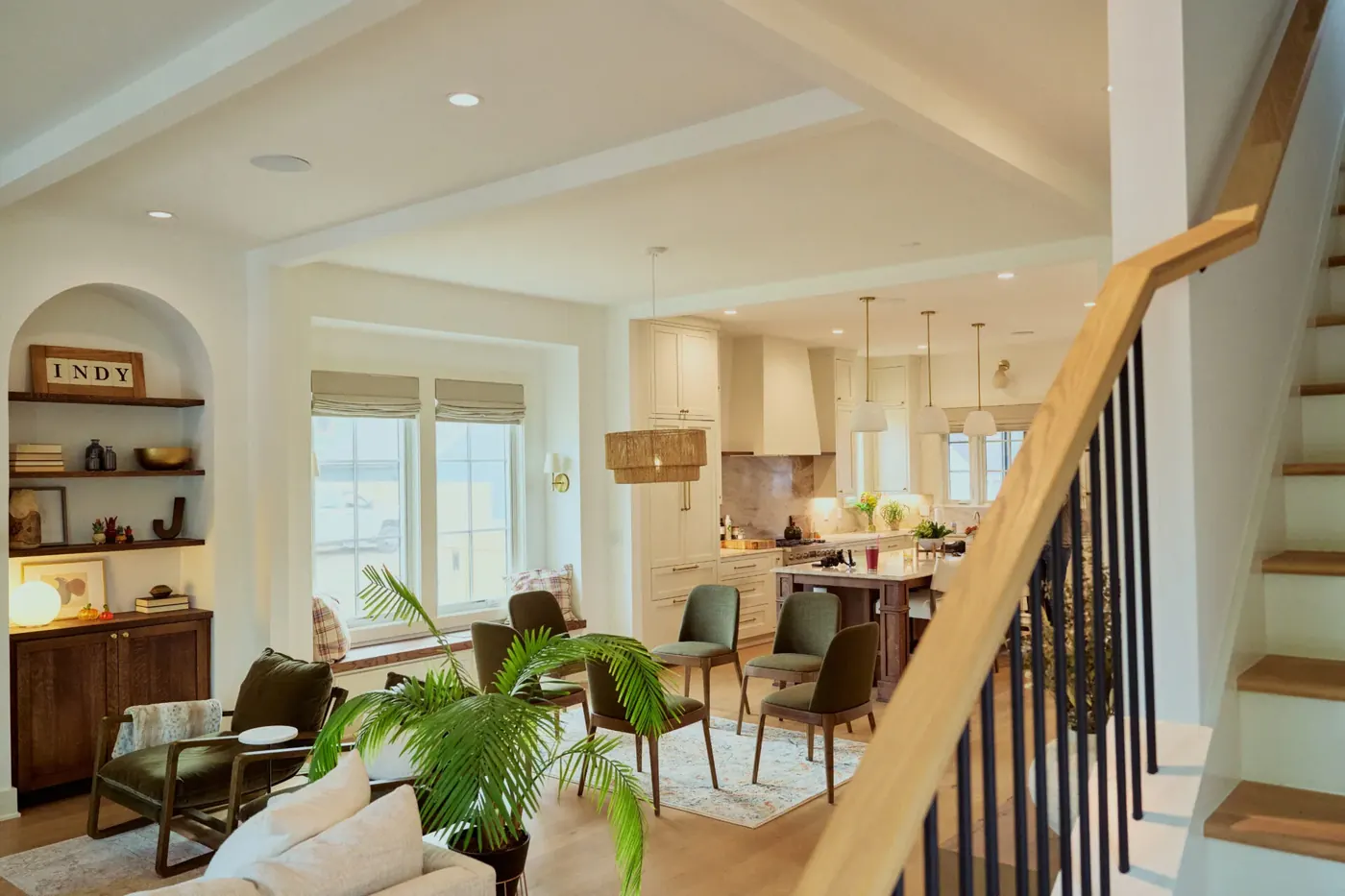
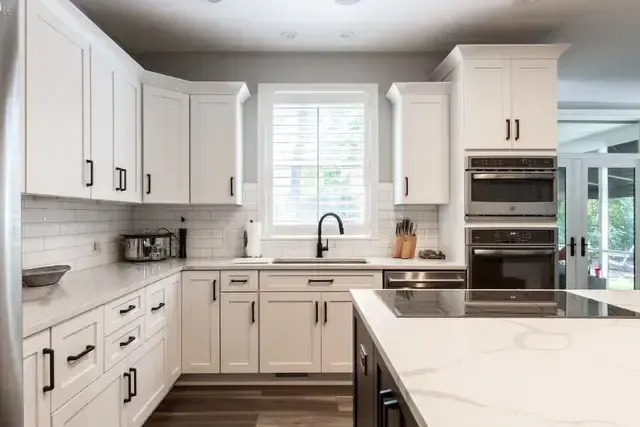
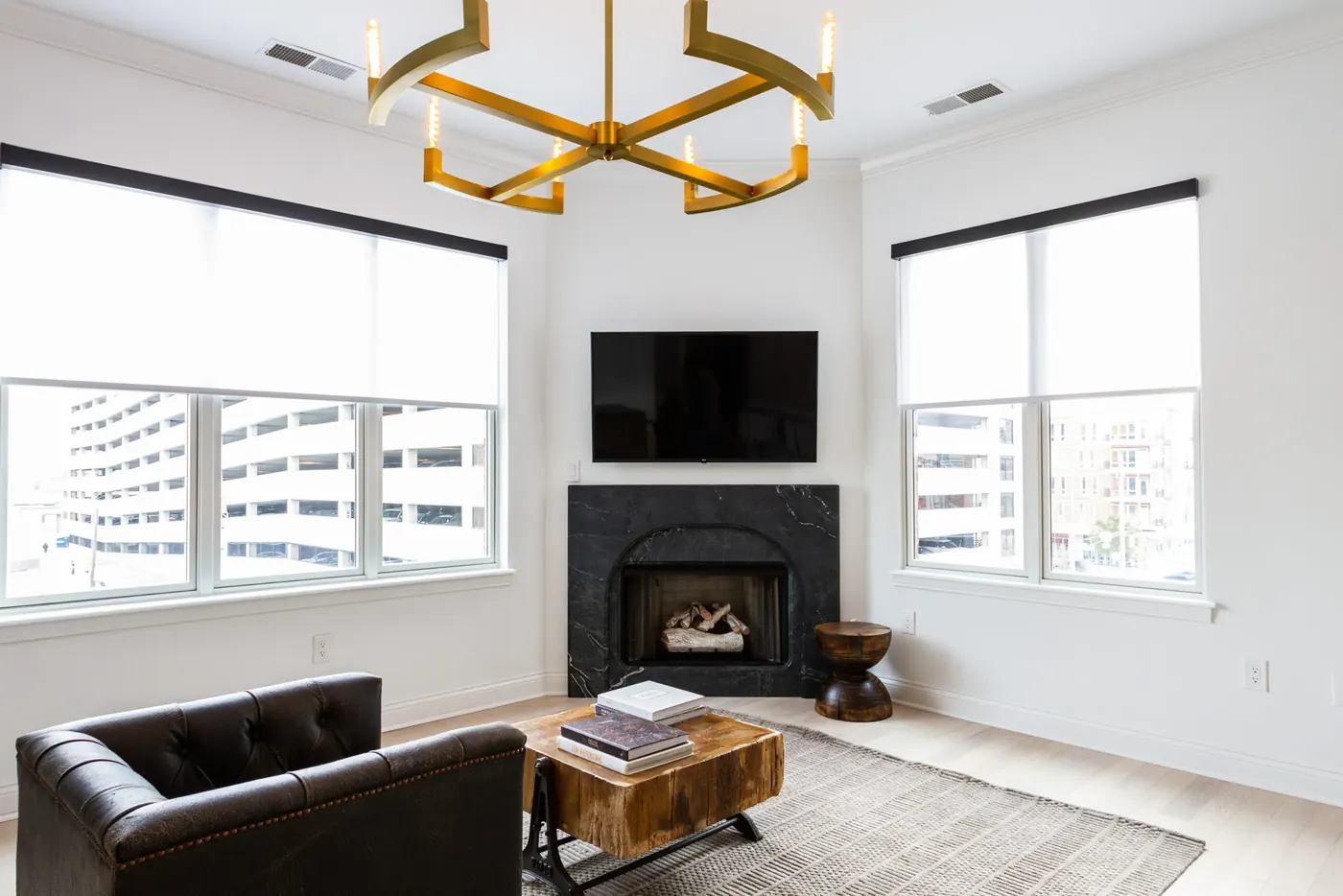
Custom shades measured and installed in NoblesvillePlantation shutters fitted to a Noblesville windowCellular shades in a Noblesville living room
Scope of Work

What Aluminum Mini Blinds Includes

Every Noblesville job is documented item by item. Here is what the crew covers.

Every opening measured on its own and cut to size at the factory, never trimmed down from a stock blind on a truck

Three widths taken per opening so the narrowest one governs the order, because a mini blind binds fast if it's cut long

Corner-to-corner square check on every opening, including the utility ones nobody looks at twice

Slat gauge specified, the heavier gauge where a blind gets handled daily and the lighter one where cost governs

Slat size set per opening, 1 inch as the standard, 1/2 inch on shallow openings and sidelights, 2 inch where a wider face suits

Mounting depth read so a 1 inch headrail clears any handle, lock or crank inside the opening

Inside or outside mount decided opening by opening rather than once for a whole building

Cordless lift specified in units children use and offered as the default on rental turnovers

Products specified to conform to ANSI/WCMA A100.1-2022 for cord access

Cord tilt or wand tilt chosen against what the room actually needs rather than what's cheapest

Bracket substrate identified before install day: drywall, plaster, hardwood trim, block or steel

Color matched across a run so a whole building reads the same from the parking lot

Unit counts and finished sizes listed per opening on the paperwork so a single blind can be reordered later

Valance clips counted and checked, since a snapped clip is the usual reason a valance sits crooked

Light gap per side disclosed even on the least expensive units in the order

Old blinds removed, brackets pulled and the hardware hauled off rather than left in a bag

Every blind tilted through full travel and raised to the headrail before sign-off

Exact color and slat size written down for the owner where a building is getting a run of them

Pricing

What Aluminum Mini Blinds Cost in Noblesville

National figures for the category put stock blinds and shades around $60 to $600 a window, with custom-fabricated product running roughly $250 to $2,600. Aluminum sits at the bottom of that, and there's no reason to pretend otherwise. It's the least expensive thing we hang, and on a rental turnover or a run of utility openings that's exactly the point. What you're paying for over a box-store blind is that each unit gets cut to your measured opening rather than trimmed down from a stock width, plus a heavier slat gauge if you want one. Volume changes the math on a building in Hamilton County. Noblesville Window Treatments prices per opening in Noblesville rather than by the box.

By Product

How Aluminum Mini Blinds Differ by Product

Every product in this trade behaves differently in a room. Here is what that means for this work.

1 inch aluminum slat: The standard mini blind and the reason the category exists. A thin slat stacks to almost nothing at the top, fits shallow openings other products can't, and costs less than anything else that still counts as a real window covering.

1/2 inch micro slat: Half the slat width, so the stack is tiny and the blind almost disappears when raised. It's the answer on a shallow opening, a narrow sidelight beside a door, or a small commercial opening where a 1 inch headrail won't clear.

2 inch aluminum slat: A wider aluminum slat that reads more like a blind and less like a utility fitting. It gives better view when tilted open and covers more per slat. Choose it where the budget is tight but the room is still one people sit in.

Heavier gauge slat: Thicker aluminum that resists a crease and springs back from a knock that would permanently fold a thin slat. It costs a little more per unit. On any opening people reach through daily, that difference pays back within the first year.

Lighter gauge slat: The thinner, less expensive slat. It's honest value on openings that get looked at rather than handled, like a high utility window or a stairwell landing, and it's the wrong pick anywhere a hand is going in every day.

Cord tilt: A short cord loop beside the headrail that turns the tilt. It's the traditional control, it costs nothing extra, and it's the one to avoid where a child could reach it or a door swing keeps catching the loop.

Wand tilt: A rigid wand instead of a hanging tilt cord. Nothing loops, nothing swings into a door, and it's what we specify on any unit where a cord shouldn't be present at all. On mini blinds it adds very little to the price.

Cordless lift: No lift cord on the blind, with a spring mechanism doing the work in the headrail. On a light aluminum blind cordless feels particularly good, and it's the specification we push on rentals where you can't control who lives there next.

Perforated slats: Slats punched with a fine pattern so some daylight passes even when the blind is closed. It's a light-and-privacy compromise you occasionally want in a commercial corridor or a stairwell, where full darkness is the wrong outcome.

Hold-down brackets: Small brackets at the bottom rail that pin the blind to the frame. They stop a blind swinging every time a door opens, which is why they belong on any opening set into a door and on windows near a busy walkway.

Common Questions

Aluminum Mini Blinds FAQ

Questions we hear most often from Noblesville homeowners considering aluminum mini blinds.

For a standard size opening, honestly, sometimes not, and we'd rather say that than pretend. Where custom earns the difference is when the opening isn't standard, which downtown it rarely is. A tall narrow masonry opening above a storefront, a window that has been altered, or a run where finished widths vary by half an inch will all defeat stock sizes. Custom also gets you a proper cordless system and a headrail that isn't going to rack after a year of daily use. There's a second argument for custom on a commercial job, which is consistency. A stock size fitted to twelve openings that vary by half an inch gives you twelve slightly different reveals, and on a street facing floor that shows. Custom widths make the row read as one specification.
Match the frame, not the wall. A blind finished close to the color of the frame it sits in reads as part of the opening from inside and from the street. On the downtown upper floors, where the openings are visible from the square and the buildings themselves are contributing structures in a 54-building commercial district, consistency across a floor matters more than the individual choice. We usually specify one finish per elevation and hold to it. For a residential opening the logic reverses. Matching the wall makes a blind recede into the room, matching the frame makes it recede into the window. Which one you want depends on whether the window is meant to be a feature, and in the older housing around the square it usually is.
No, and anyone who says otherwise is selling you a disappointment. Aluminum takes a permanent set once it has been bent past its yield point, so a creased slat stays creased. Individual slats can sometimes be replaced if the line and the finish are still current, but on an older unit the practical answer is replacing the blind. That's part of why we suggest holding a spare unit on a job where a room is hard on them. There's one preventable cause worth naming. A blind that gets pushed aside rather than raised takes the same stress in the same place every day, and the slats crease at that point. A cordless lift makes raising the blind easy enough that people actually do it.
Better than hardwood does, since aluminum is unaffected by humidity. What it doesn't solve is the condensation issue. In a Noblesville January, moisture on cold glass runs down and collects at the bottom of the opening, and an inside mounted blind sits right in it. The bottom slat and the bottom rail take the worst of it. Tilting the stack open on cold mornings lets it dry, and an outside mount keeps the assembly further off the glass. An outside mount also gives you a second benefit in a bathroom, which is that the slat stack sits clear of the glass so air moves behind it. That does more against winter condensation than any material choice, and it costs nothing extra to specify.
They're the most replaceable product on the list, which is the right frame for rental property. A unit that gets damaged is swapped opening by opening rather than room by room, and the per opening cost is low enough that a turnover replacement isn't a budget event. What we do suggest for a landlord is standardizing on one finish and one slat across a portfolio, so a stored spare fits any unit rather than only the one it was ordered for. Worth adding for a landlord: keep the operating system simple. A cordless blind has nothing a tenant can break, nothing to restring and no safety device to install correctly, which removes most of the reasons a maintenance call gets logged against a window covering at all.
Very little, and you shouldn't buy them for it. A metal slat conducts heat rather than resisting it, so on a west elevation a closed aluminum blind will itself get warm. It blocks the beam and kills the glare, which is worth something at five in the afternoon in July, but if the room actually needs thermal help then cellular product or an exterior shade is the correct spend. We would rather point you at the right product than oversell this one. There's a partial exception on a north elevation, where the load is diffuse rather than direct and glare rather than heat is the whole complaint. There an aluminum blind performs perfectly well, and spending up to cellular product buys very little you'll notice.
Some lines permit on site trimming and we carry the equipment for it, though on custom work it's rarely needed because the unit is fabricated to the measured width. Where it genuinely helps is a commercial job with a long run of openings and a tight schedule, since it lets one or two odd openings be handled on the day rather than reordered. It isn't a substitute for measuring properly in the first place. What on site trimming never fixes is height. Cutting width is a controlled operation on some product lines; shortening a blind means removing slats and reworking the bottom rail, which is a workroom job. Height errors go back for refabrication, which is why the measure matters more than the equipment does.
Cordless lift, and it isn't really a debate. Any accessible cord is a hazard in a room with children in it, and in a regulated occupancy the specification shouldn't include one. On commercial jobs we also check operating reach against ADA section 308 and the five pound force limit in section 309.4, since a control that meets the safety requirement but can't be reached by staff will simply be worked around. Mounting height matters as much as the lift system in those rooms. A control that sits within easy reach of a standing adult is also within reach of a child, so on classroom work we generally place controls high, specify cordless anyway, and check the arrangement against the ADA reach ranges for staff.
For one spare bedroom window that's a reasonable answer, and we'd rather say so than talk you out of it. Where it stops working is a run of openings. Stock blinds come in fixed widths and get trimmed down at the store, and a trimmed blind carries its problems for life. If you're doing a whole building, a rental turnover or anything where the units should match and keep working, cut-to-size aluminum is cheap enough that the difference is small and the outcome is different.
Because the whole blind gets shortened, not just the slats. A store cut takes the slats, the bottom rail and the headrail through a saw at once, and the ends of the slats come out with a burr and a slightly rough edge. Those ends then run against the inside of the opening every time the blind moves, and they bind. The tilt goes stiff at one end, the slats stop lining up, and a cord lock takes the strain. A factory-cut blind has finished ends.
No, and this is the honest limitation of the product. Aluminum takes a permanent set. A slat pushed aside so somebody could look out, chewed by a dog, or folded by a vacuum head stays creased, and the crease shows worst when the blind is closed and light rakes across it. There's no repair. You can replace individual slats on some lines, and a heavier gauge resists creasing much better, which is exactly why we specify it on openings that get handled.
It's the thickness of the metal. A heavier gauge slat is stiffer, holds its shape across a wider blind, and springs back from a knock that would permanently fold a thin one. A lighter gauge costs less and is perfectly fine on an opening nobody reaches into. The difference per unit is small, so the decision is really about where the blind lives. Utility windows out of reach get the lighter one. Anything at hand height gets the heavier one.
Start with the opening depth and the size of the window. The 1 inch slat is the standard and it suits nearly everything. Drop to 1/2 inch where the opening is shallow, where a 1 inch headrail won't fit behind a handle, or on a narrow sidelight beside a door, since a wide slat on a narrow opening looks wrong and hardly opens a view anyway. The micro slat also stacks to almost nothing, which matters when the window is short.
They will. Metal conducts, so a closed aluminum blind sitting behind glass in direct afternoon sun gets genuinely warm to the touch, and it re-radiates some of that heat into the room. That's a real difference from a fabric shade or a composite slat. It's rarely a problem in a garage or a laundry room, which is where these usually go. If a room is somewhere people sit through a hot afternoon in Noblesville, a solar screen or a cellular shade is the better tool.
Yes, more than any other product we hang. Thin metal slats rattle against each other when a door opens or air moves across them, and a blind on an opening near an air register will announce itself. Hold-down brackets at the bottom rail cut most of it by pinning the blind to the frame. A heavier gauge slat is quieter because it's stiffer. If silence matters in the room, this isn't the product to specify.
This is the product's home ground. A garage swings from freezing to hot and dusty, and it's exactly where a wood blind fails and a fabric shade gets filthy. Aluminum doesn't care. It wipes off, it costs little enough that replacing one unit is nothing, and a heavier gauge slat handles being knocked. We'd add hold-down brackets on anything near a door that opens, and cordless on anything a kid might reach.
That's most of what this product does for property owners. We list every opening with its finished width and height on your paperwork, along with the exact color and slat size, so a single unit can be ordered later without re-measuring the building. Expect a small color difference between production runs on white, which matters less on aluminum than on wood because the units usually aren't side by side. Cordless is worth specifying across a building, since you can't control who lives there next.
They can be, and the lift choice is the whole answer. A corded mini blind is the classic problem product, so we specify cordless in any unit a child uses. There's no lift cord on the blind at all, which is the direction the ANSI/WCMA A100.1-2022 work on cord access points, and inner-cord non-compliance is treated as a substantial product hazard under 16 CFR 1120.3. Wand tilt replaces the tilt cord loop. The other consideration is the slat edge, which is thin metal and worth respecting.
Easily, and you can be less careful than with anything else. Close the slats one way, dust across the face, close them the other way, repeat. Marks come off with a damp cloth and mild soap. Water doesn't hurt the slats at all, though the headrail holds the tilt gears and the cord lock, so keep it dry. Don't press hard while wiping, because pushing a thin slat is how it gets creased in the first place.
Glare, yes, quite a lot. Tilting the slats up bounces direct sun toward the ceiling and takes the hard edge off a room while you still get daylight. On heat the answer is weaker, since metal conducts and the closed blind warms up rather than insulating. The documented energy testing in this trade sits with cellular shades, not with blinds, and we won't borrow that result. On fading, closing the slats reduces UV exposure and slows the damage. It doesn't end it.
Longer than people assume in a room nobody touches, and not long at all in a room where they get handled. The mechanism is the usual limit: a cord lock wears, a tilt gear strips, or the ladder string frays after enough cycles. The slats themselves outlive all of that unless something creases them. In a utility space you can get many years out of one. On a busy patio door opening, plan on this being a product you replace rather than repair.
Usually the short end of the two to five week custom fabrication window, since aluminum is a high-volume product and there's no finish to cure. A large run for a building can take longer simply because of quantity. You'll get the window in writing along with scope, dates and total price, which the Indiana Home Improvement Contract Act requires on residential work over $150. Nothing here is urgent work, and we'd rather give you a real date than a hopeful one.
Free In-Home Measure

Schedule Your Free In-Home Measure in Noblesville

Contact Information

Reach Us Directly

Our team prioritizes scheduled measures and service calls, and books in-home measures during business hours.

Office
1417 Commerce Avenue, Indianapolis, IN 46201
Hours
Mon-Fri 8a-6p
Service Area
Noblesville, IN and Surrounding Areas

Ready to Book Your Measure?

Call us to set up an in-home measure, or to ask about a treatment that has stopped working. We will talk it through on the phone first.

Service area

Serving Noblesville and the surrounding area

Call NowGet Quote