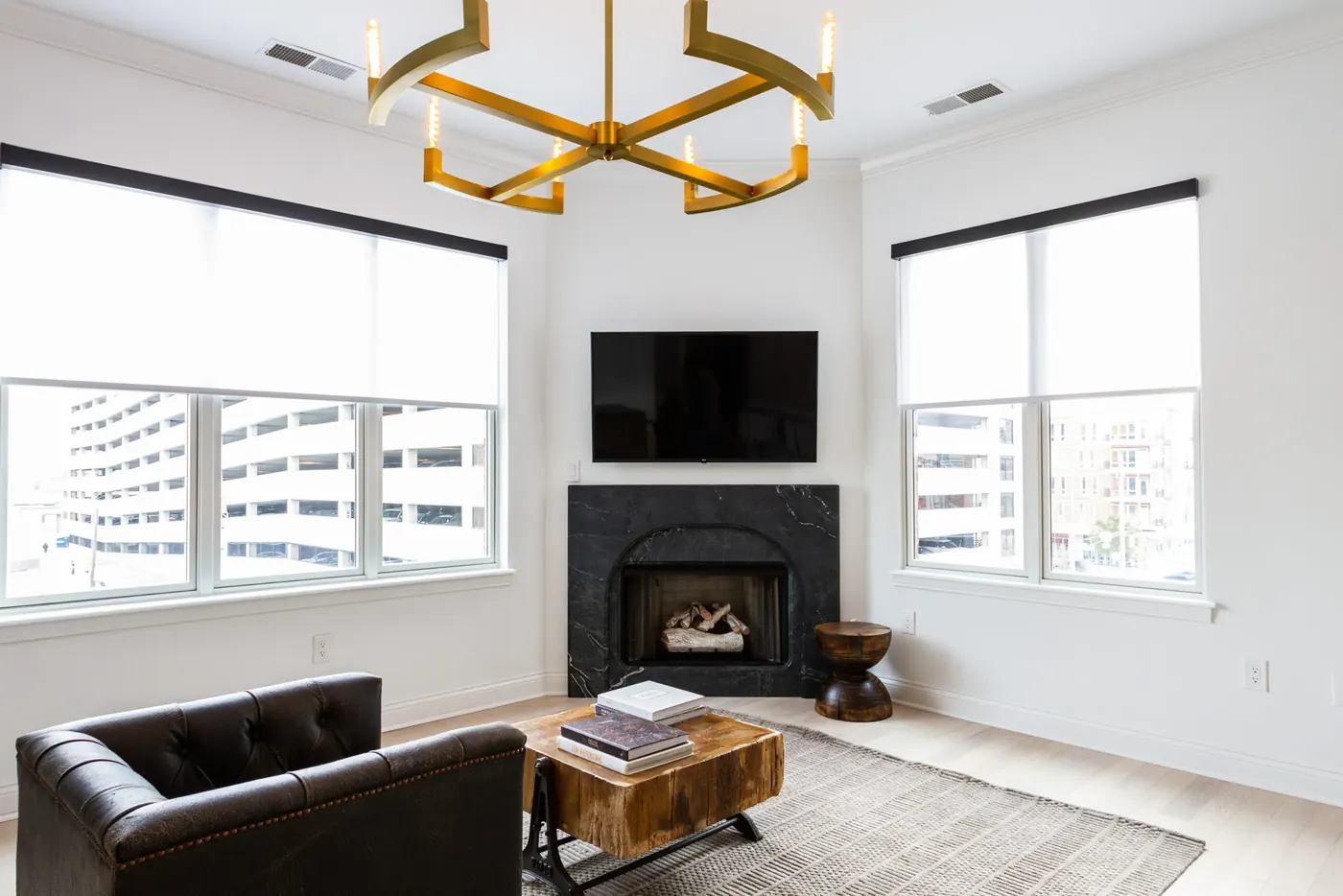
Window Treatment in Catherine Street Historic District (also called the North 9th Street Historic District), Noblesville
Custom Noblesville window treatment crews serving Catherine Street Historic District (also called the North 9th Street Historic District) homeowners with free in-home measure, repair, replacement.
This part of Noblesville has its own patterns, from lot orientation to how close the houses sit to the street. Both affect privacy and glare, and the answers below take that into account.
- Services: faux wood blinds, wood blinds, vertical blinds, aluminum mini blinds
- Service area: Catherine Street Historic District (also called the North 9th Street Historic District), Noblesville, IN and surrounding areas Realistic sequence: appointment for the measure, a written specification, then fabrication of two to five weeks, then install. None of it needs rushing, and pushing the factory is where mistakes on custom sizes come from.
- Insured and bonded
- Serving Noblesville, IN since 2008
Local Window Treatment Experience in Catherine Street Historic District (also called the North 9th Street Historic District)
Sixty seven years of building, three architectural styles and nothing since 1937. That's a narrower brief than the Original plat gives us and it makes the work more predictable, though not easier. The Queen Anne houses carry bay and oriel projections, leaded and stained glass transoms, round or polygonal turret openings and paired narrow units. The Italianate elevations run tall and narrow with segmental or bracketed heads. The bungalows from the 1910 to 1937 end bring wide grouped front windows, sleeping porch banks and multi light upper lights over single light lower ones.</p><p style="font-size:16px;color:#4a5a6a;line-height:1.75;margin:16px 0 0">A house here typically has somewhere between fourteen and twenty six openings, and a floor area estimate will undercount them badly. The Queen Anne stock in particular carries a lot of small and irregular openings that nobody counts from outside: a stair landing light, a pantry window, a pair of narrow units flanking a chimney. We count them on site. It's common for the measured schedule to come back with four or five more openings than the homeowner expected, and it's much better to find that at the measure than at the install.
We have served Catherine Street Historic District (also called the North 9th Street Historic District) homeowners through the full range of window treatment needs, from inspections and repairs to full replacements. Whatever the system, our Noblesville crew approaches every project with clear communication and respect for your property.
Fifty contributing buildings, about 1870 to 1937, listed in 2001
The district was listed on the National Register in 2001 with 50 contributing buildings and one contributing site. Development ran from about 1870 to 1937, which means every house here is between 88 and 155 years old and there's no post war or modern section under the district name. Styles are Queen Anne, Italianate and Bungalow or American Craftsman. The older lots carry predominantly two story work while the 1910 to 1937 lots bring single story and one and a-half story Craftsman bungalows into the mix.
Lots are narrow 19th century town lots on the north side grid, so the district inherits the near cardinal orientation of the 1823 town plat. Parcel level floor areas couldn't be isolated for the district specifically because it spans several separate addition plats, and comparable pre-1940 Noblesville stock records between 792 and 3,000 square feet. Assessed values were likewise not isolated to the district, with the surrounding Original plat distribution running $20,400 to $1,731,400 and a midpoint near $177,000.
Three style vocabularies, all of them irregular
The Queen Anne houses give you the widest range of shapes in Noblesville: bay and oriel projections, round and polygonal turret openings, leaded and stained glass transoms, and paired narrow units where a single wider one would be expected. The Italianate elevations are tall and narrow with segmental or bracketed heads. The bungalows are different again, with wide grouped front windows, sleeping porch banks and multi light upper lights over a single light lower. Three vocabularies, one district, and often two of them on adjoining lots.
Underneath the variety the mounting conditions are consistent and difficult. Original casing profiles will foul a modern inside mount on a large share of openings, and storm build ups take what depth is left. Every structure here has been settling on wood frame for between 88 and 155 years, so material out of square should be expected on every opening rather than looked for on some. Plan for outside mount and for solutions fitted to the opening rather than dropped into it.
Turret and polygonal openings
Queen Anne turrets put a run of narrow openings on a curved or faceted plan, and each one is its own dimension with its own angle to the next. These are template jobs and they add real time before fabrication. Treating the run as one design decision rather than five separate windows is what makes the finished result look intentional.
Bungalow window groups
The 1910 to 1937 houses group wide front windows and run banks across a sleeping porch. Those groups want one treatment across the whole assembly, or matched closed lines so the group reads as one element. Treating each unit separately makes a bungalow front look busy from the street, which is exactly the wrong result.
Leaded and stained transoms
Colored and leaded glass appears above entries and above main windows in the Queen Anne stock. Our default is to leave it uncovered and treat the opening below it. Where the room needs full cover, a shade that lives at the head of the lower section keeps the decorative glass visible during the day.
Canopy more than a century old
The street trees here are older than the newest houses in the district, and they shade these blocks through the summer in a way no post-2000 Noblesville plat comes close to. That genuinely lowers solar load, so a higher openness solar fabric usually works here where a bare lot would need a much lower one. It also keeps more of the view.
Specifying inside a National Register district
Nothing about the designation constrains the specification, so the choices are driven by the fabric and by the canopy. Racked openings and profiled casing push most rooms to outside mount or to a frame fitted to the opening. Mature shade means the thermal and glare pressure is lower than the compass heading suggests, so we tend to keep openness factors higher here and preserve the view. And because the styles vary within one house, the way to keep a scheme coherent is to repeat product families rather than to chase matching openings.
Shutters with a divider rail
On the tall Italianate openings a shutter frame absorbs the out of square condition, and a divider rail lets the lower half close for privacy while the upper stays open. On a street where houses sit close to the sidewalk, that split is what makes a front room usable during the day without shutting it down.
Woven wood on the bungalow groups
Natural weaves sit well with Craftsman proportions and the wood tones those houses usually carry inside. Run across a grouped front window as one treatment, they read as a single element rather than three shades. A privacy liner is worth pricing, since an unlined weave gives very little cover after dark.
Higher openness solar fabric
With century old canopy already doing part of the work, a 5 or 10 percent openness fabric usually handles the glare here and keeps the view of the street trees, which is a large part of why people live in this district. On an unshaded elevation we'd drop lower, but that's the exception on these blocks.
Roman shades in the formal rooms
Flat or hobbled folds suit the proportions of the Queen Anne and Italianate front rooms, and an outside mount on a level board covers a racked opening completely. Lining choice matters here more than color does, since a tightly lined shade sitting against cold glass in January is where condensation shows up first.
The north side, eight blocks up
The district sits on the north side grid off 9th Street, about eight blocks north of the courthouse square, and residents describe it as the north side and walk to the square from it. Forest Park is close, and the Noblesville Preservation Alliance, founded in 1987, is the organization most closely associated with these blocks and with the two residential National Register districts in the city. Because the district follows the 1823 cardinal grid, orientation is predictable street by street, which is unusual and useful when we're planning exposure.
No HOA and no architectural committee
There's no HOA here and no architectural review body. National Register listing recognizes historic significance, it doesn't create a permit process, and Indiana Landmarks is explicit that owners may modify National Register property as they wish unless federal or state money is involved in the work. Whether any city ordinance imposes review on exterior alterations isn't something we've been able to verify, and interior window treatments wouldn't be within such a review in any case. Compared with an HOA subdivision, there's nobody to submit to and nothing to wait on.
Window Treatment Services in Catherine Street Historic District (also called the North 9th Street Historic District)
Every service Noblesville Window Treatments offers across Noblesville is available to Catherine Street Historic District (also called the North 9th Street Historic District) homeowners.
Faux Wood Blinds in Catherine Street Historic District (also called the North 9th Street Historic District)
The slat that ignores a Noblesville humidity swing
Learn more →Wood Blinds in Catherine Street Historic District (also called the North 9th Street Historic District)
Basswood matched to trim that predates the county's paved roads
Learn more →Vertical Blinds in Catherine Street Historic District (also called the North 9th Street Historic District)
Built around which patio panel you actually walk through
Learn more →Aluminum Mini Blinds in Catherine Street Historic District (also called the North 9th Street Historic District)
Slim headrails for openings that will not take depth
Learn more →Roller Shades in Catherine Street Historic District (also called the North 9th Street Historic District)
The gap goes on the quote before the order goes in
Learn more →Solar Shades in Catherine Street Historic District (also called the North 9th Street Historic District)
Openness chosen against your own view, not a chart
Learn more →Cellular Shades in Catherine Street Historic District (also called the North 9th Street Historic District)
One product that works in July and in January
Learn more →Zebra Shades in Catherine Street Historic District (also called the North 9th Street Historic District)
Two bands on one tube, aligned at install
Learn more →Roman Shades in Catherine Street Historic District (also called the North 9th Street Historic District)
Soft fabric that hides a hundred years of settling
Learn more →Woven Wood Shades in Catherine Street Historic District (also called the North 9th Street Historic District)
Bamboo and reed for rooms that face real timber
Learn more →Blackout Shades in Catherine Street Historic District (also called the North 9th Street Historic District)
Darkness is scope and channels, not just fabric
Learn more →Plantation Shutters in Catherine Street Historic District (also called the North 9th Street Historic District)
A frame built square to an opening that is not
Learn more →Cafe Shutters in Catherine Street Historic District (also called the North 9th Street Historic District)
Privacy at eye level, the upper light untouched
Learn more →Motorized Shades in Catherine Street Historic District (also called the North 9th Street Historic District)
Battery life stated before the motor is chosen
Learn more →Custom Drapery in Catherine Street Historic District (also called the North 9th Street Historic District)
Yardage, return and anchor decided before fabric
Learn more →Valances & Top Treatments in Catherine Street Historic District (also called the North 9th Street Historic District)
Making an outside mount look like a decision
Learn more →Exterior Solar Shades in Catherine Street Historic District (also called the North 9th Street Historic District)
Stopping the load outside the glass, not after it
Learn more →Retractable Awnings in Catherine Street Historic District (also called the North 9th Street Historic District)
Shade from four o'clock, retracted by October
Learn more →Commercial Window Treatments in Catherine Street Historic District (also called the North 9th Street Historic District)
Reach ranges, force limits and test documents first
Learn more →Skylight Shades in Catherine Street Historic District (also called the North 9th Street Historic District)
Overhead glass, handled from the floor
Learn more →Sliding Glass Door Blinds in Catherine Street Historic District (also called the North 9th Street Historic District)
Where the stack parks decides the daily annoyance
Learn more →Panel Track Blinds in Catherine Street Historic District (also called the North 9th Street Historic District)
Stack side and stack depth, settled before fabrication
Learn more →Sheer Shades in Catherine Street Historic District (also called the North 9th Street Historic District)
Soft vanes, and a straight answer about darkness
Learn more →Pleated Shades in Catherine Street Historic District (also called the North 9th Street Historic District)
A single fold, priced honestly against a cellular
Learn more →Bamboo Shades in Catherine Street Historic District (also called the North 9th Street Historic District)
Every weave passes light, so the liner is the decision
Learn more →Dual Shades in Catherine Street Historic District (also called the North 9th Street Historic District)
Level the tube, or the bands never line up
Learn more →Top-Down Bottom-Up Shades in Catherine Street Historic District (also called the North 9th Street Historic District)
Two lift paths in one headrail, and twice the hardware
Learn more →Cordless Blinds in Catherine Street Historic District (also called the North 9th Street Historic District)
Nothing hanging down, and a spring that ages
Learn more →Hardwood Shutters in Catherine Street Historic District (also called the North 9th Street Historic District)
Real wood where the room stays dry, composite where it doesn't
Learn more →Composite Shutters in Catherine Street Historic District (also called the North 9th Street Historic District)
Heavier panels, so a wide opening gets a T-post
Learn more →Smart Home Shade Integration in Catherine Street Historic District (also called the North 9th Street Historic District)
Protocol chosen for the house, not for the app
Learn more →Blind Repair & Restring in Catherine Street Historic District (also called the North 9th Street Historic District)
Restrung where it's worth it, replaced where it isn't
Learn more →Shutter Repair in Catherine Street Historic District (also called the North 9th Street Historic District)
Matching an old panel is the first thing we check
Learn more →Motorization Retrofit in Catherine Street Historic District (also called the North 9th Street Historic District)
Some headrails take a motor, plenty don't
Learn more →Outdoor Patio Shades in Catherine Street Historic District (also called the North 9th Street Historic District)
Anchored into structure, because wind is the failure mode
Learn more →Office Window Treatments in Catherine Street Historic District (also called the North 9th Street Historic District)
Openness factor set at the workstation, not at the glass
Learn more →Healthcare Window Treatments in Catherine Street Historic District (also called the North 9th Street Historic District)
Cordless and cleanable, with the paperwork up front
Learn more →Multifamily Window Treatments in Catherine Street Historic District (also called the North 9th Street Historic District)
One specification per floor plan, and a dye lot record
Learn more →The Noblesville Corner of Hamilton County
Catherine Street Historic District (also called the North 9th Street Historic District) is one of several Noblesville communities we serve. We measure and install across Noblesville, Hamilton County, and surrounding areas.
Catherine Street Historic District (also called the North 9th Street Historic District) Window Treatment FAQ
Questions we hear most often from Catherine Street Historic District (also called the North 9th Street Historic District) homeowners.
Free Assessment in Catherine Street Historic District (also called the North 9th Street Historic District)
Schedule a free, no-obligation window covering inspection. We respond promptly to all Catherine Street Historic District (also called the North 9th Street Historic District) inquiries.