Budgeting Window Treatments for Your New Noblesville Home
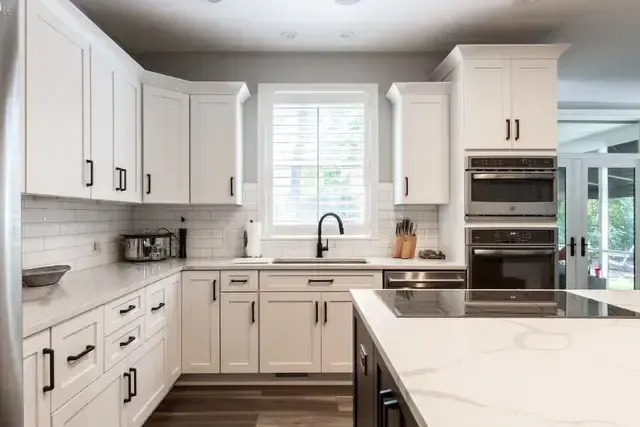
A new Noblesville home comes with a builder allowance for window coverings and a long list of decisions the allowance doesn't cover. When to measure, how to mount around a drywall return, when to phase the job, and what to do about a two story wall of glass all matter more than which fabric you pick first.
What a builder allowance actually buys
What comes with a new house is a stock product, cut down at the design center to fit the plan's window sizes. It isn't a bad product, it's just not a finished answer. The color and opacity list is short, usually one white and one light filtering fabric for the whole house, and the package addresses none of the specific problems a room can have.
Stock coverings run roughly $60 to $600 a window nationally. Custom coverings, measured in the home and installed, run roughly $250 to $2,600. A Noblesville builder allowance is sized against the first range, and knowing that gap exists before move-in day saves a lot of frustration at the design center.
Measure the house that got built, not the plan
Treat a plan dimension as a starting guess, not a number to order from. Drywall thickness, corner bead, trim reveal, and paint each take a bite out of a framed opening, paint being one more layer once everything else is already dry. A thirty six inch opening on the drawing can finish a half inch off in either direction, and rarely finishes the same width top and bottom.
Wait until the walls are drywalled and trimmed, and the paint is actually dry, before measuring. Better still, wait until the punch list closes too, since a Noblesville builder will reset trim and shim sills during that final pass. Drapery has its own rule: it gets measured after finished flooring goes in, because the floor sets the hem. Hard coverings skip that step, since they hang from the top of the opening.
Phase the house instead of doing it all at once
Nothing says a new house has to be finished in one order. Privacy comes first, bedrooms, bathrooms, any room at eye level from the street, and an office where a screen faces the window. Cheap paper shades cover everything else for a season and peel off without damaging fresh paint.
Next come the rooms you spend real time in, bought as complete rooms so the fabric comes from one dye lot instead of several. Drapery and top treatments wait until last, both because they're easier to choose once furniture is in place and because drapery can't be measured until the finished flooring goes down.
The one risk in waiting is a fabric mismatch. A white bought in 2008 isn't guaranteed to match one bought eighteen months later, and that gap is obvious in afternoon light. Record the product line, fabric name, color code, and mount type on each order, and a Noblesville homeowner finishing a house over two seasons still ends up with rooms that match.
The two story great room window wall
Start by asking whether the upper units in a Noblesville great room need covering at all. A wall facing north with a comfortable room might not need anything up there. One facing west that turns the room into an oven by mid-afternoon has its entire problem sitting in that upper glass, and it's worth solving before anything else. Whatever gets covered up there, nothing eighteen feet up is operable by hand, so motorization is the only practical answer, not a luxury add-on.
Battery motors run roughly $100 to $300 a window less than hardwired ones, which sounds like an easy call until you remember battery wands commonly need fresh batteries about once a year, and that wall needs a lift to reach. If the walls are still open, running power while it's easy is usually the better long-term move.
Sizing matters too. Very tall shades leave bigger light gaps at the edges, and one major manufacturer flags larger gaps on shades 120 inches and taller or near a four to one height to width ratio. An upper band and a lower band, run separately, usually beats one enormous shade. On a view wall, solar fabric is the usual pick, with openness factor, roughly one to ten percent, trading glare control against how much view you keep.
Window coverings are the last line item in a new house and the first one people underestimate. Spend where it matters and phase the rest. Indiana requires a written contract on residential work over one hundred fifty dollars under IC 24-5-11, and Noblesville Window Treatments puts the scope, the price, and the finish codes in writing on every order so later rooms still match. We're insured and bonded. Reach us at (317) 999-5154.
Trim style and mounting decide what's possible
Two different trim conditions show up in the same new house, and they change everything about mounting. Full wood casing gives you a sill and an apron to work with. Drywall returns give you nothing but drywall wrapping into the opening, no wood at all.
A drywall return opening usually has enough flat depth for an inside mount. An outside mount is the harder call, since drywall by itself won't hold a bracket under real load, meaning the framing above the opening has to be hit or a mounting board goes in first. Drapery hardware carries the same issue with more weight riding on it.
The cheapest time to solve this in a Noblesville build is before the drywall goes up, adding blocking wherever a drapery rod is likely to land. It takes a builder a few minutes during framing and it's a real project to add after the fact.
Frequently Asked Questions
What do we do about the two story great room windows?
Break it into separate questions. Do the upper units need covering at all? If they face north and the room is comfortable, leaving them bare is a legitimate answer. If they face west, they're usually the whole problem. Operation comes next, since nothing at that height is hand operable, so motorization is practical rather than a luxury. Hardwiring while the walls are open beats an annual battery service on a wall that needs a lift to reach, and splitting the wall into two bands usually behaves better than one giant shade.
Should I just use the builder allowance?
Use it, and understand what it buys. Allowances are usually calculated against stock product cut down on site, which runs roughly $60 to $600 a window nationally, while custom coverings measured in the home and installed run roughly $250 to $2,600. The allowance covers secondary rooms perfectly well. It doesn't cover a dark bedroom, a glare-free office, a two story window wall, or drapery of any kind. Many people take the stock package for the back of the house and buy properly for the rooms they use.
My windows have drywall returns and no wood trim. What does that change?
Mostly the mounting. An inside mount usually still works, since a drywall return opening often has plenty of flat depth for a headrail. An outside mount is the harder one, since drywall by itself won't hold a bracket under load. That means hitting the framing above the opening or installing a mounting board first. Drapery hardware runs into the same problem with more weight on it, which is why blocking behind the drywall is worth asking for while the house is still open.
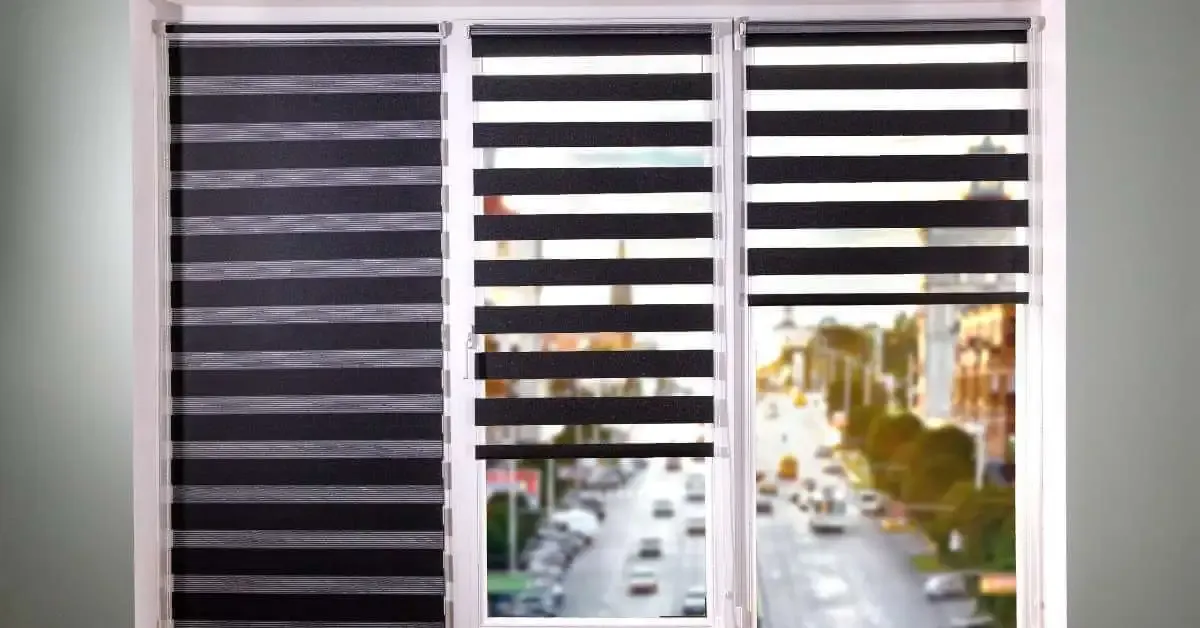 Blackout vs Room Darkening: What Actually Blocks More Light
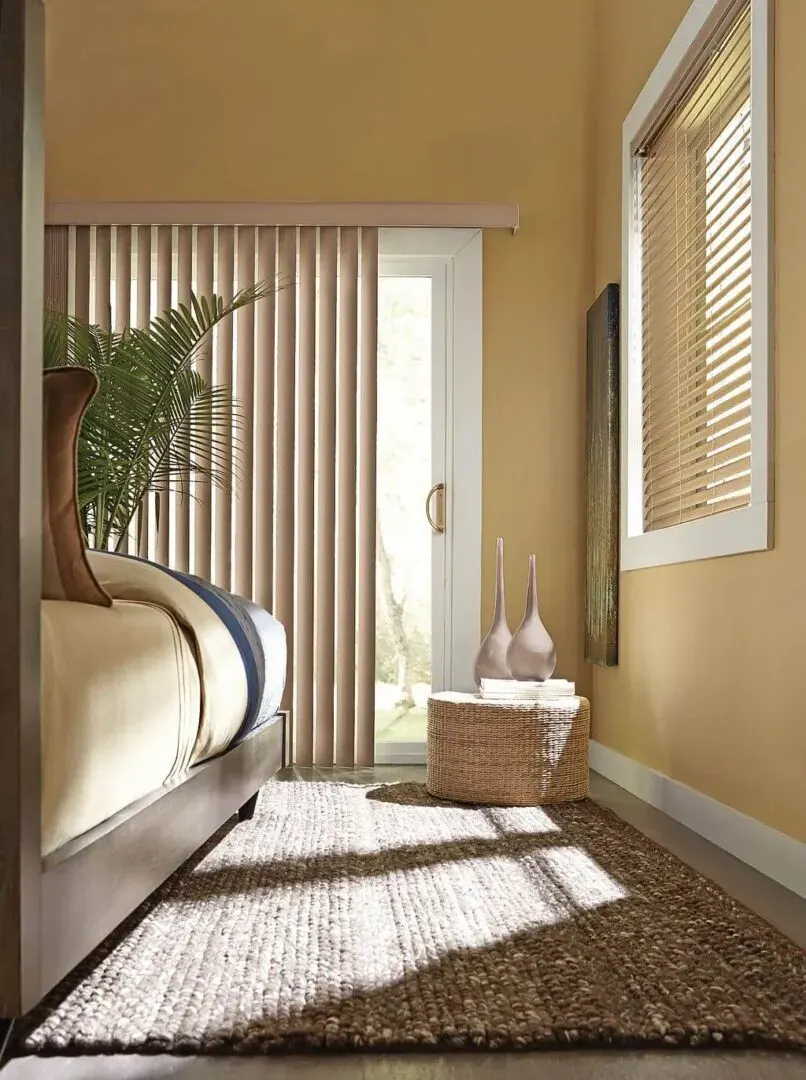 Inside Mount vs Outside Mount, Explained by Someone Who Installs Both
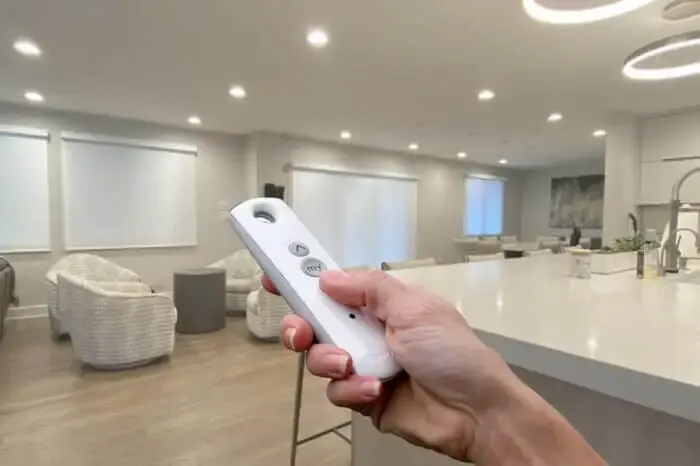 Which Smart Home Hub Fits Your Noblesville Shades